Artwork | 공식 작품명 text | Artist | Artist name | Year | Medium | 업로드상태 | 검수 단계 | Slug 작가-제목-연도 | 그림 라이선스 출처 | Must-See | 공식 그림 설명 | Description | 전시여부 | [DB] Museum | Location(통합) | 비고 | 원어 작품명 | 한글 작품명 | Location_룸넘버 | [DB] online collection | 구분선 | 생성 일시 | 썸네일 | 작품 크기 | 작품시절 | 추천 태그 |
|---|---|---|---|---|---|---|---|---|---|---|---|---|---|---|---|---|---|---|---|---|---|---|---|---|---|---|
The Execution of Torrijos and his Companions on the Beach at Málaga | Antonio Gisbert Pérez | After 1888 | Oil on panel | (4)업로드대기 | 검수 완료(이미지) | prado-antonio-gisbert-execution-of-torrijos-malaga | Once considered a sketch, this work is actually an unfinished reduced replica of the original masterpiece. The artist reused a panel previously containing another composition, as revealed by X-ray analysis. The quality of the painting on this support allows for a unique appreciation of the artist's careful brushwork and pictorial values, reflecting Gisbert's practice of creating smaller versions of his major historical works. | Location📍 | 간략, 설명, 태그 검수 요망 / 위치 확인완료 | Fusilamiento de Torrijos y sus compañeros en las playas de Málaga | 말라가 해변에서의 토리호스와 동료들의 처형 | Room 075 | Divider | Feb 11, 2026 8:26 AM | 47 x 71 cm | |||||||||||
At the Ball | Berthe Morisot | 1875 | Oil on canvas | (5)Published | 검수 완료(이미지) | at-the-ball | Exhibited at the second Impressionist exhibition in 1876, this portrait features an unknown model in Morisot's apartment on Avenue d'Eylau, identifiable by the lush plants in the background. The artist focuses on the textures of the ball gown, where the white muslin bodice, gloves, and fan contrast sharply with the dark hair and eyes. The work is characterized by the restricted palette of 1875, accented by touches of yellow, red, blue, and green. | On view + | Au bal | 무도회에서 | Level 1, The Berthe Morisot Collection | Divider | Jan 21, 2026 7:09 AM | 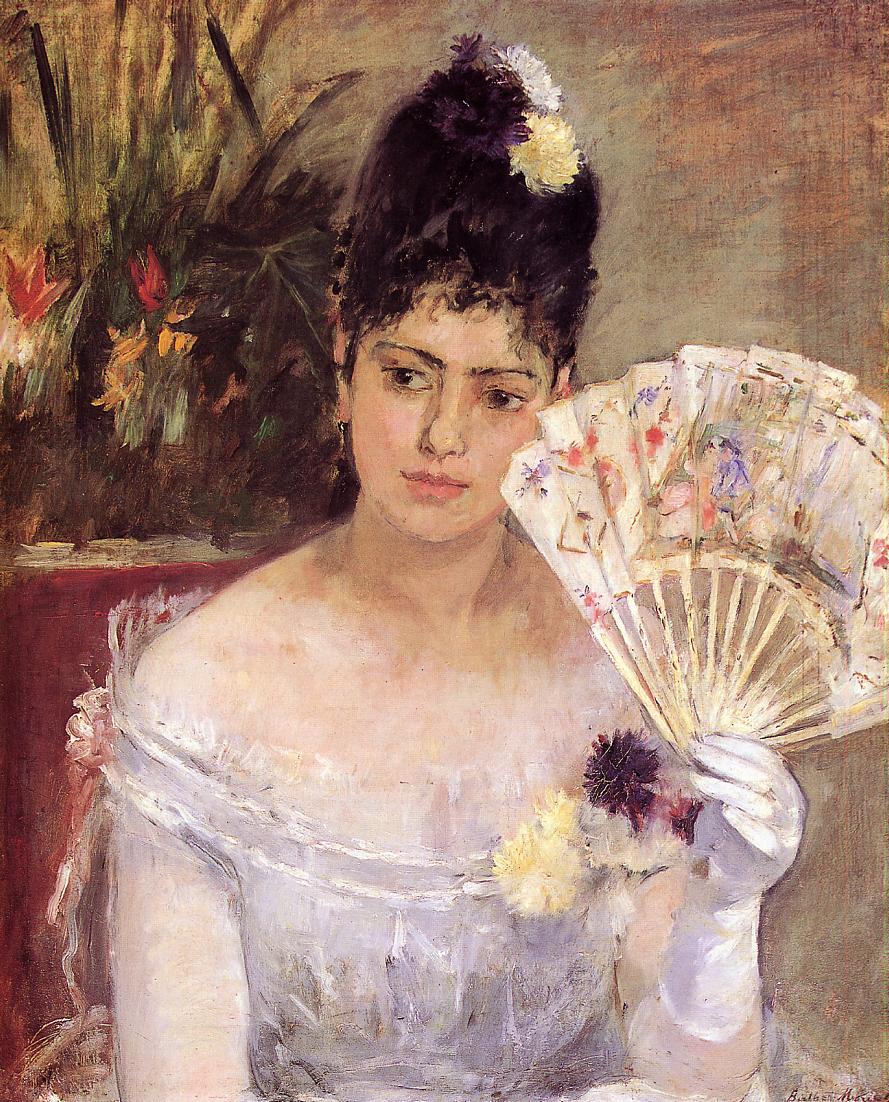 | Must-See | |||||||||||
Browse the full collection | (5)Published | 검수 완료 | Divider | Jul 8, 2026 7:58 AM |  | |||||||||||||||||||||
Browse the full collection | (5)Published | 검수 완료 | Jun 10, 2026 4:59 AM |  | ||||||||||||||||||||||
Browse the full collection | (5)Published | Jun 10, 2026 4:42 AM |  | |||||||||||||||||||||||
Browse the full collection | Oil on canvas | (5)Published | 검수 중(정보) | May 13, 2026 8:19 AM |  | |||||||||||||||||||||
Browse the full collection All 2300+ | (5)Published | Divider | Jul 17, 2026 8:18 AM |  | ||||||||||||||||||||||
The Village | Chaïm Soutine | c 1923 | Oil on canvas | (5)Published | 검수 완료 | the-village | Le Village is considered the most radical and unusual of Chaim Soutine's landscapes. While the subject—comprising houses, trees, and the sky—appears classical, the treatment reveals a tormented character and an affirmation of great modernity. Soutine dramatically distorted and intertwined every element, effectively eliminating any traditional sense of perspective or balance. This "mental landscape" eclipses the strict observation of nature to make way for a profound expression of feeling. Despite its distorted appearance, the painting is modeled after a real location: La Basse Gaude, a village near Cagnes. This work belongs to a series of nine paintings produced in 1923-1924, featuring houses and a mill clinging to a rocky hillside at varying heights. Soutine created this piece during a period of emotional contradiction; in late 1923, he wrote to the Parisian gallery owner Zborowski, "I would like to leave Cagnes. This landscape that I can no longer stand..." This anguished and subjective reinterpretation of his environment firmly places Soutine within the Expressionist tradition that was particularly marked before and after the First World War. | On view + | Le Village | 마을 | Niveau -2, Salle 15 | Divider | Jan 27, 2026 7:23 AM | 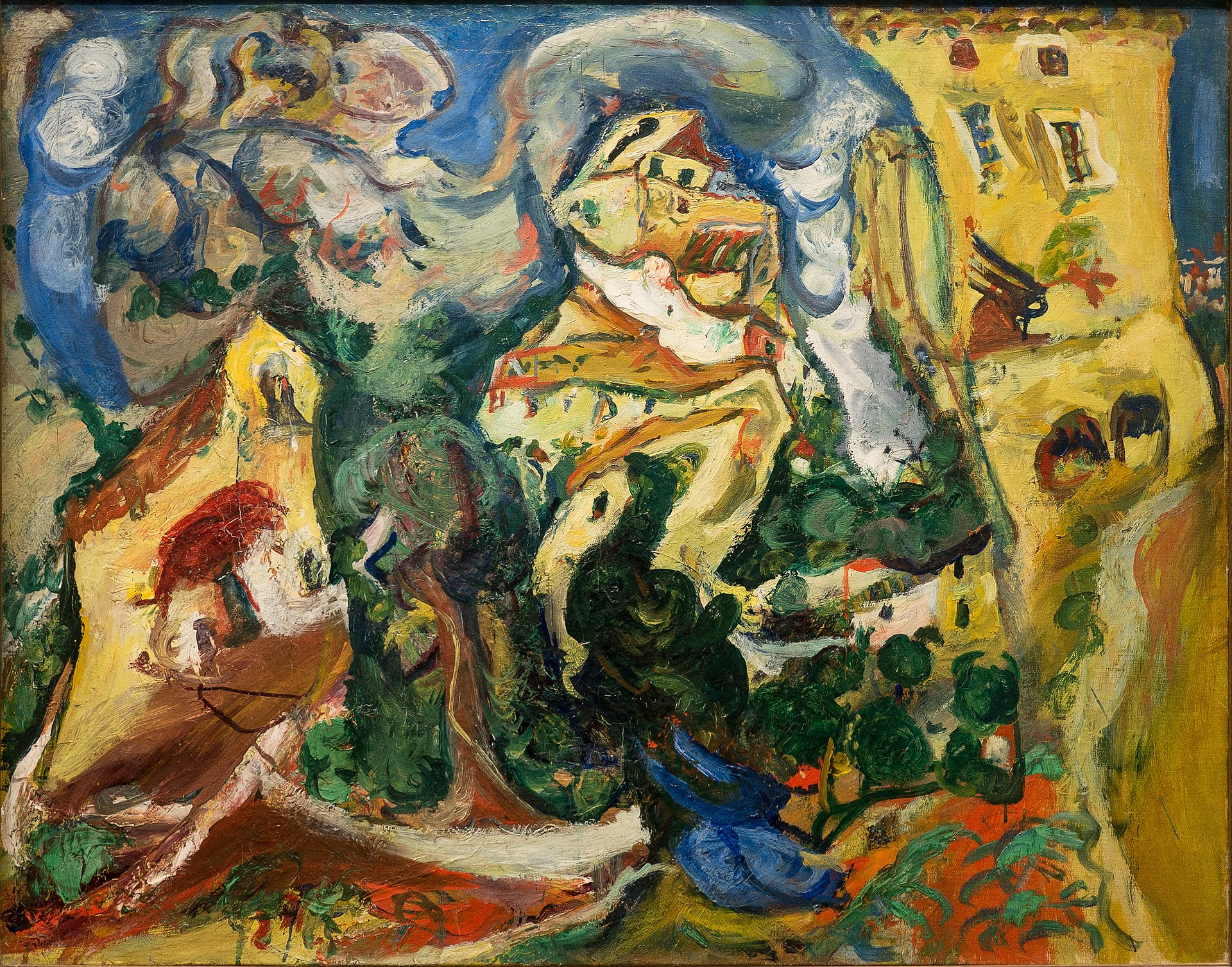 | 73,5 x 92 cm | Must-See | ||||||||||
The Little Pastry Cook | Chaïm Soutine | 1922–1923 | Oil on canvas | (5)Published | 검수 완료 | the-little-pastry-cook-soutine | This portrait of a pastry cook marked a decisive moment in Chaïm Soutine’s career. In 1923, after Paul Guillaume acquired a version of the subject—now in the Barnes Foundation Collection—it was immediately hailed by Albert Barnes as "a peach!", transforming Soutine overnight into a recognized hero of Montparnasse. Soutine produced six versions of this same subject that are known today. Likely inspired by Jean Fouquet’s Portrait of Charles VII in the Louvre, the model’s pose—featuring an elongated face, fragile neck, and distorted features—exudes a strong expressive power. The flat, vivid red of the cloth creates a striking contrast against the white jacket rendered with touches of grey and green. Paul Guillaume purchased this exceptionally accomplished version in the early 1930s as a tribute to the first "Pastry Cook" that he had liked so much. This painting is now held in the Musée de l’Orangerie, preserving the legacy of the work that so significantly changed Soutine’s fortunes. | On view + | Le Petit Pâtissier | 어린 제과사 | Niveau -2, Salle 9 | Divider | Jan 20, 2026 8:19 AM | 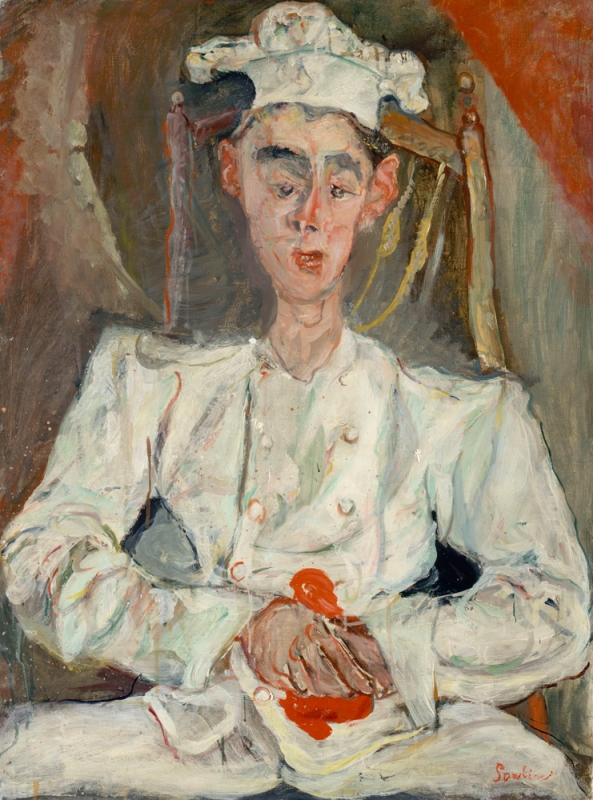 | Must-See | |||||||||||
Sunset on the Seine at Lavacourt, Winter Effect | Claude Monet | 1880 | Oil on canvas | (5)Published | 검수 완료 | sunset-on-the-seine-at-lavacourt-winter-effect | Following the particularly harsh winter of 1879, Claude Monet produced twenty or so paintings during the early months of 1880, observing the Seine’s ice slowly thawing. Driven by a lack of money, he sought reentry into the official Salon with this landscape of Lavacourt—a village on the left bank of the Seine, opposite his base in Vétheuil. While a deliberately toned down version was accepted, this work was rejected as Monet gave freer rein to pictorial experimentation. The painting barely figures the topographical aspects, instead emphasizing the importance of air and water through colour. Monet used fine, fluid strokes in the upper third for the cold mist, while the water and banks feature wider strokes with impasto highlights. The orange sunset at the composition's center recalls the 1872 work, Impression, Sunrise (Paris, Marmottan Museum), providing an impression of haste, instability, and transience fitting for the twilight hour. This masterpiece was gifted to the Petit Palais in 1906 by Edward Brandus. | On view + | Soleil couchant sur la Seine à Lavacourt, effet d'hiver | 라바쿠르 세느 강의 일몰, 겨울 효과 | Room 8 | Divider | Jan 6, 2026 11:38 AM | 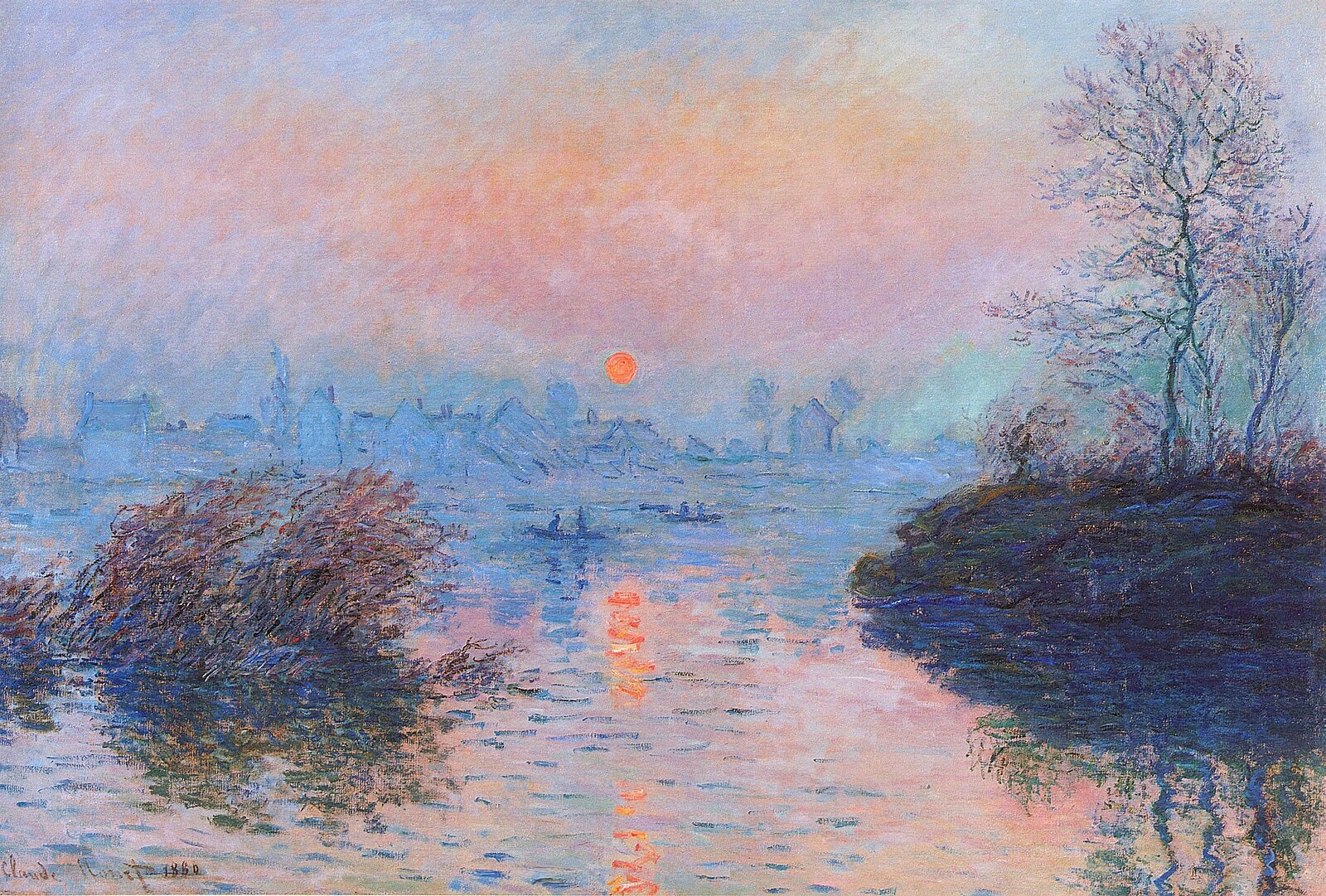 | Must-See | |||||||||||
Impression, Sunrise | Claude Monet | 1872 | Oil on canvas | (5)Published | 검수 완료 | impression-sunrise | During a stay at the Hôtel de l'Amirauté in Le Havre around November 1872, Claude Monet painted his most famous work, Impression, Sunrise. From his bedroom window, he captured a southeastern view of the avant-port at dawn. The composition is structured by the Quai au Bois on the left and the Quai Courbe—then under construction—on the right. A central opening reveals the location of the transatlantic lock leading to the Bassin de l'Eure. Cranes, chimneys, and masts are enveloped in the mist of an autumnal dawn, while the ferrymen's boats, the vivid orange sun, and its reflections were added as Monet finished the canvas. Painted in just a few hours, this evanescent image is remarkable for its uncommon freedom of execution. For the 1874 exhibition at Nadar's former studios, Monet titled the work simply "Impression." This term, a part of painters' jargon since the mid-19th century, signified a growing interest in capturing an atmosphere rather than a meticulous description of nature. While conservative critic Louis Leroy used the title to mockingly label the group in Le Charivari, a few days later, defender Jules Castagnary adopted the term "impressionists" with a positive meaning. It has since designated the group formed by Monet and his friends, with this painting serving as their ultimate symbol. Donated by Eugène and Victorine Donop de Monchy in 1940, this work remains a global icon. | On view + | Impression, soleil levant | 인상, 일출 | Level 1, Monet Gallery | Divider | Jan 6, 2026 1:06 PM | 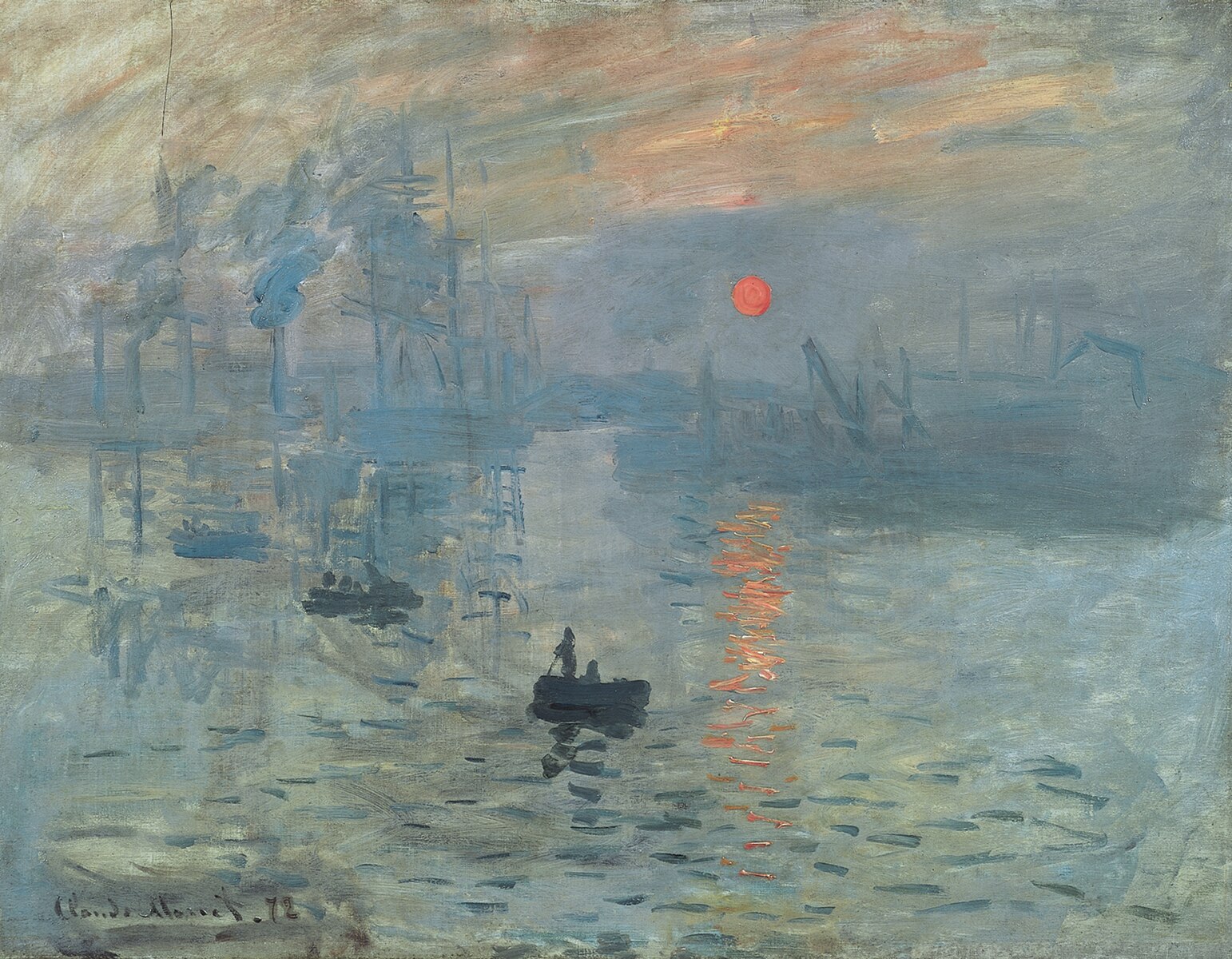 | Must-See | |||||||||||
Rouen Cathedral, Setting Sun, End of Day | Claude Monet | 1892 | Oil on canvas | (5)Published | 검수 완료(이미지) | rouen-cathedral-setting-sun-end-of-day | In 1892, Monet stayed in apartments facing Rouen Cathedral to undertake a large-scale project painting the western portal from various angles and at different times of the day, a task that occupied him from February to April for two consecutive years. Working on as many as nine canvases a day, Monet was deeply immersed in this endeavor. Critics highly praised the artist's experimentation and desire to push the boundaries of painting through unprecedented research. This version, held at the Musée Marmottan Monet, does not yet possess the thicker texture seen in other canvases of the series. Monet interpreted the stone in contact with the sun through a harmony of pink, beige, and yellow, contrasting with the shaded areas suggested by mauve and blue tints. | On view + | 태그 맞춰야함, 최종 검수 해야함 | Cathédrale de Rouen, effet de soleil, fin de journée | 루앙 대성당, 일몰, 일과 끝의 효과 | Level 1, Monet Gallery | Divider | Jan 29, 2026 7:34 AM | 100 x 65 cm | Must-See | ||||||||||
View of Vétheuil | Claude Monet | 1881 | Oil on canvas | (5)Published | 검수 완료 | view-of-vtheuil | Monet lived and worked in Vétheuil, a small village on the Seine northwest of Paris, from 1878 to 1882. Although this period was marked by financial difficulties and the illness and death of his wife Camille, he continued to produce numerous light-filled landscapes of the idyllic river valley using his studio boat and working along the banks. Throughout his life, he pursued "Pleinairmalerei" painting—the spontaneous rendering of nature as a phenomenon of light and colour—and in this work, he captured the atmosphere of a hot summer day and the air glistening in the sunlight with brilliant colours and nervous brushstrokes. In this particular painting, Monet was primarily interested in the sudden change in colour intensity from nearness to distance. He applied vigorous yellows and greens to the foreground consisting of a ripe grain field and an embankment. For the middle ground, he used a light blue brightened with white to depict the town and its characteristic church tower. The background hills and the sky above are rendered in delicate, blurred pastel hues. This work, painted from a slope south of the village, captures the transition of light and colour across the landscape toward the soft blue summer sky. | On view + | Blick auf Vétheuil | 베퇴유의 풍경 | Level 2, The Batliner Collection | Divider | Jan 26, 2026 6:50 AM | 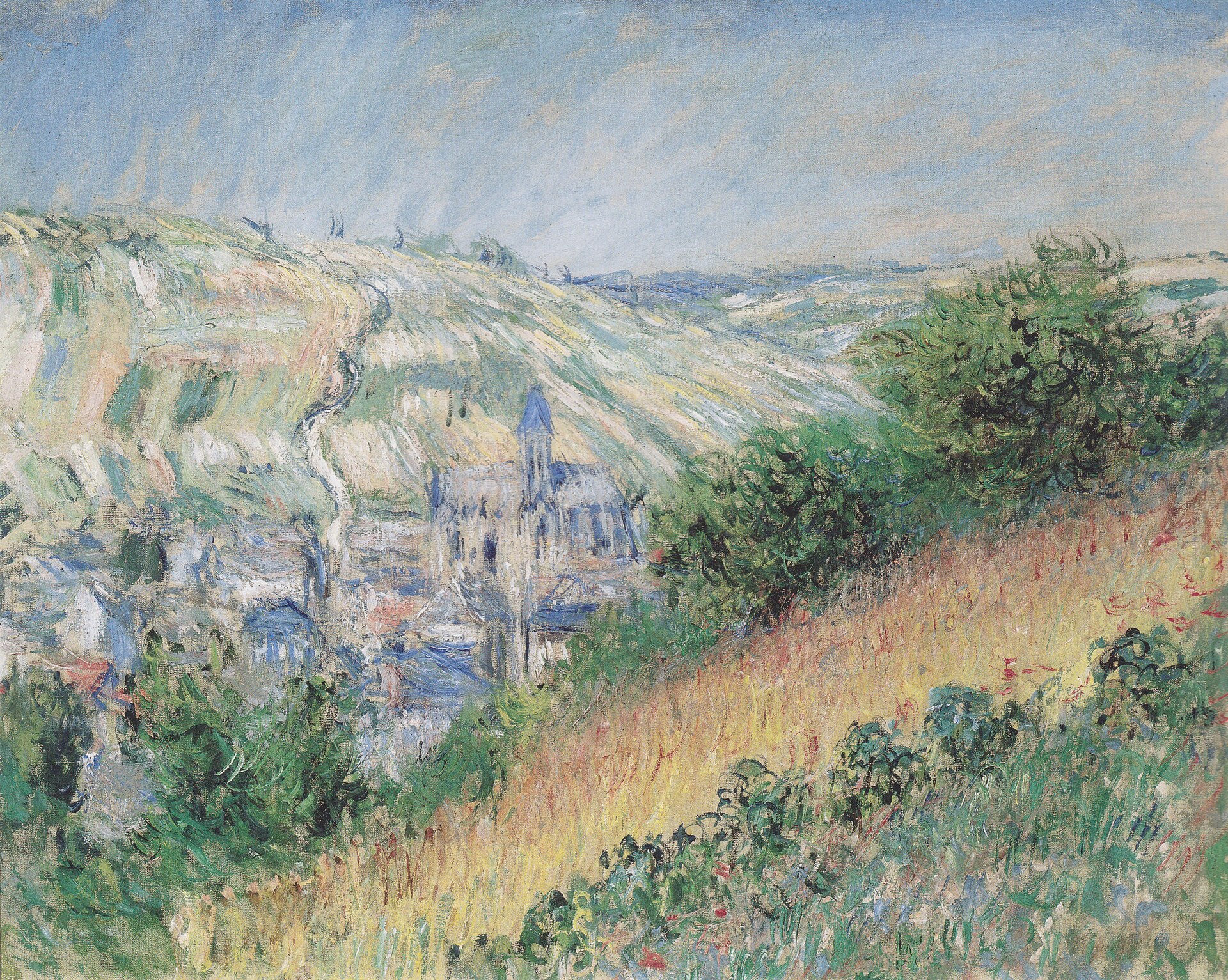 | Must-See | |||||||||||
The Water Lily Pond | Claude Monet | c.1917-1919 | Oil on canvas | (5)Published | 검수 완료 | the-water-lily-pond | Late works by Claude Monet were created in seclusion at his estate in Giverny and focus on a limited number of motifs, particularly the flower garden and the Japanese-inspired water lily pond. While earlier compositions presented scenic views with the pond and bridge at the center, his final years concentrated on selected aspects, especially the surface of the water and its reflections. The special character of these paintings lies in the abandonment of symmetry, the absence of a horizon line, and the merging of reflection and reality. This created a play between objectivity and abstraction that goes far beyond Impressionism. From 1914 onward, Monet produced large-scale panels intended for a specific architectural setting. After the Armistice in 1918, he dedicated these “grandes décorations” to the French state, which were installed posthumously in the oval rooms of the Musée de l'Orangerie. The present painting is one of the works prepared for this monumental decoration. In 1918, Monet ordered twenty canvases measuring 100 × 200 cm and painted them over the next two years. The composition features a unique asymmetrical distribution: dark reflections occupy nearly three-quarters of the right side, while sky light reflections are shifted to the left. This motif was later translated into a much larger format for the monumental triptych now housed at the Museum of Modern Art in New York. | On view + | Le Bassin aux nymphéas | 수련 연못 | Level 2, The Batliner Collection | Divider | Jan 26, 2026 5:58 AM | 100 × 200 cm | Must-See | |||||||||||
Claude Monet | 1903 | Oil on canvas | (4)업로드대기 | 검수 중(정보) | water-lilies-marmottan | Location📍 | Nymphéas | 수련 | Divider | Jan 21, 2026 7:05 AM | Must-See | |||||||||||||||
The Water Lilies | Claude Monet | 1914–1926 | Oil on canvas | (5)Published | 검수 완료 | water-lilies | A monumental set of eight compositions designed as a unique environment in two elliptical rooms. Gifted to the French State as a symbol of peace after the 1918 Armistice, it is described as the "Sistine Chapel of Impressionism.” | On view + | 연속 그림 넣어야함 / 내부 사진도 | Nymphéas | 수련 | Rez-de-chaussée, Salle 03 Nymphéas 2 | Divider | Jan 20, 2026 8:08 AM | 200 x 850 cm | Must-See | ||||||||||
The Artist's Garden at Vétheuil | Claude Monet | 1881 | Oil on canvas | (5)Published | 검수 중(정보) | the-artists-garden-at-vtheuil | On view + | The Artist's Garden at Vétheuil | West Building Main Floor, Gallery M85 | Divider | Jul 14, 2026 6:46 AM | 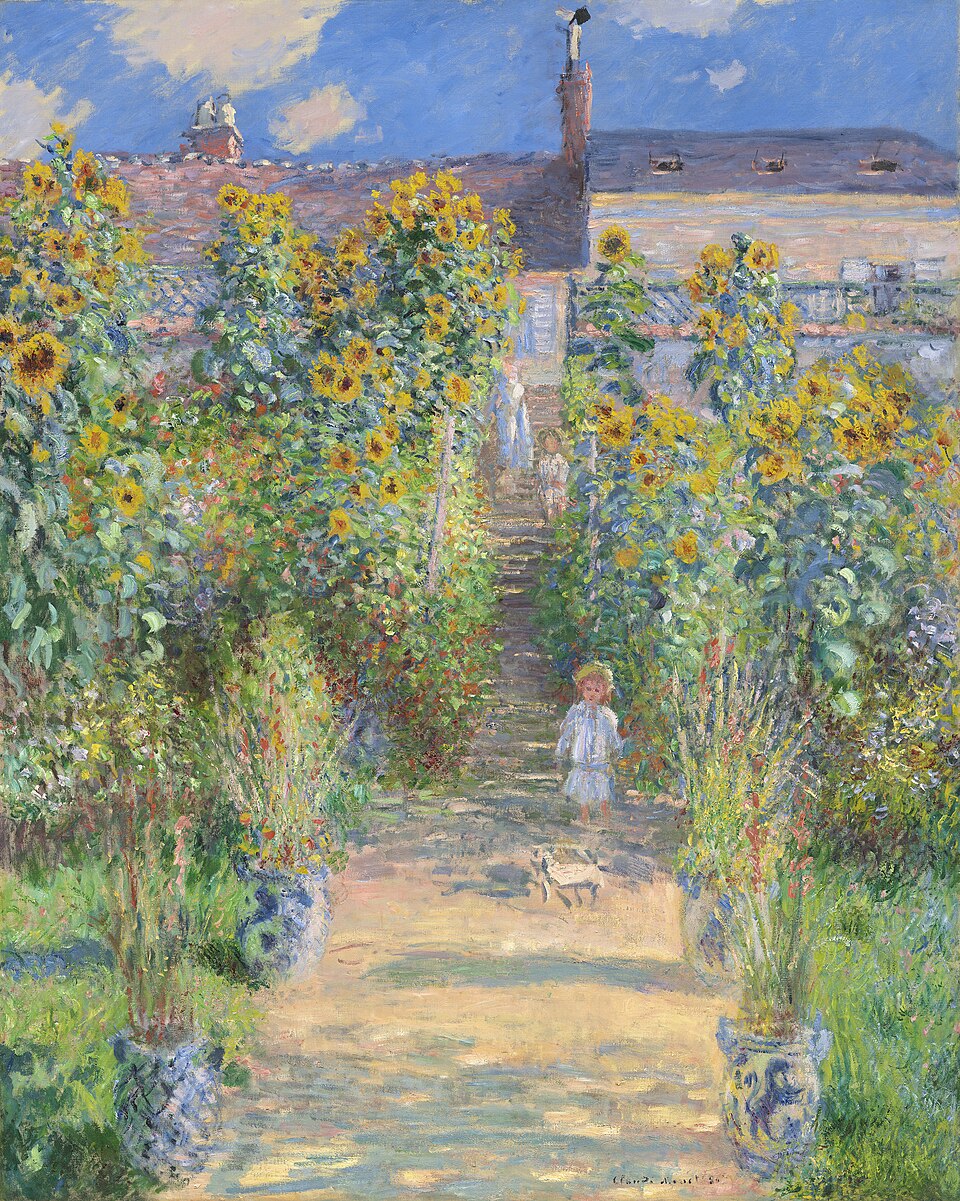 | 151.5 x 121 cm | Must-See | ||||||||||||
Rouen Cathedral, West Façade | Claude Monet | 1894 | Oil on canvas | (5)Published | 검수 중(정보) | rouen-cathedral-west-facade | On view + | Rouen Cathedral, West Façade | 루앙 대성당, 서쪽 파사드 | West Building Main Floor, Gallery M80 | Divider | Jul 14, 2026 6:26 AM | 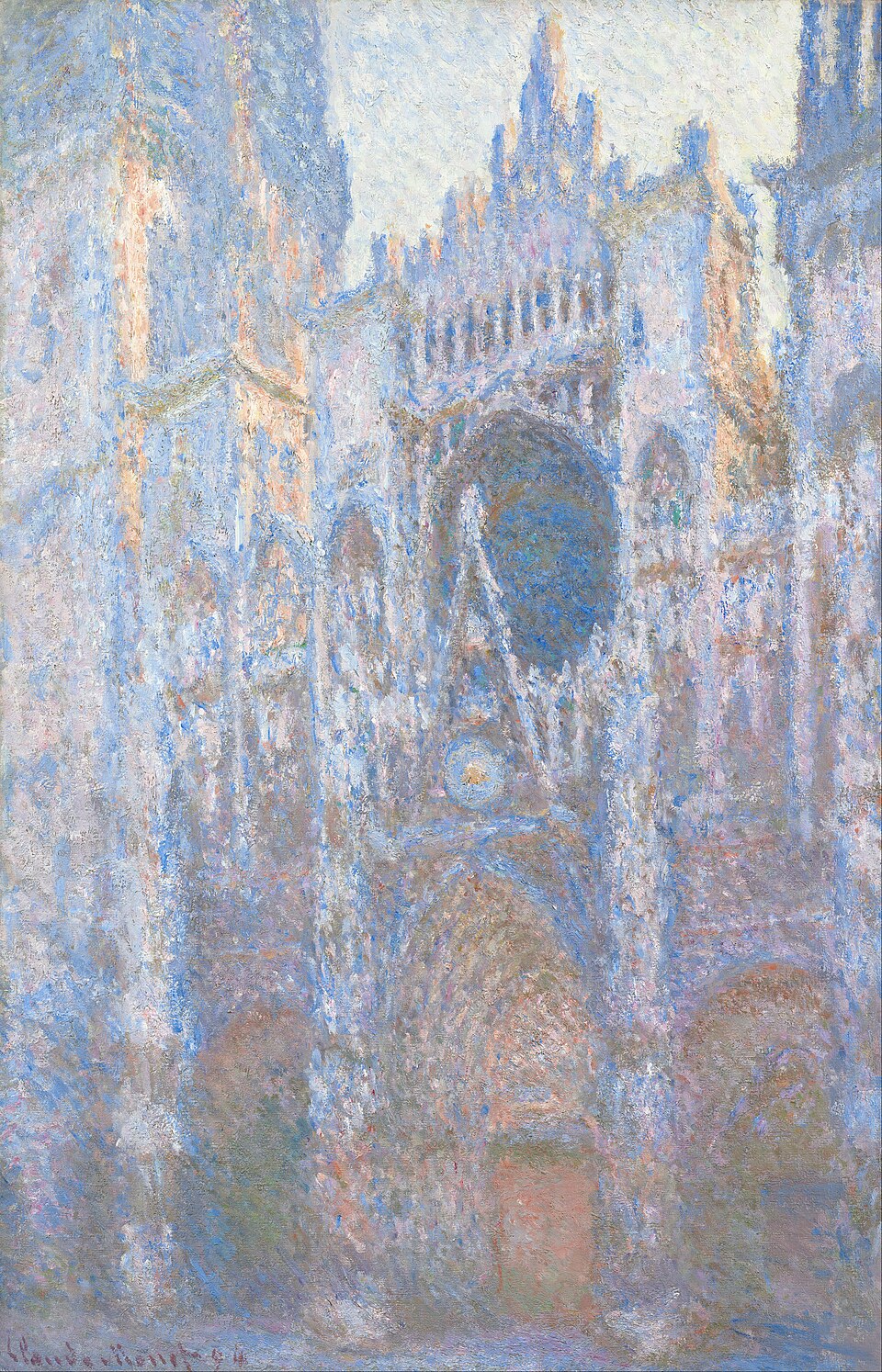 | 100.1 x 65.9 cm | Must-See | |||||||||||
Woman with a Parasol - Madame Monet and Her Son | Claude Monet | 1875 | Oil on canvas | (5)Published | 검수 중(정보) | woman-with-a-parasol-madame-monet-and-her-son | On view + | 양산을 든 여인 - 모네 부인과 아들 | West Building Main Floor, Gallery M85 | Divider | Jul 14, 2026 5:16 AM | 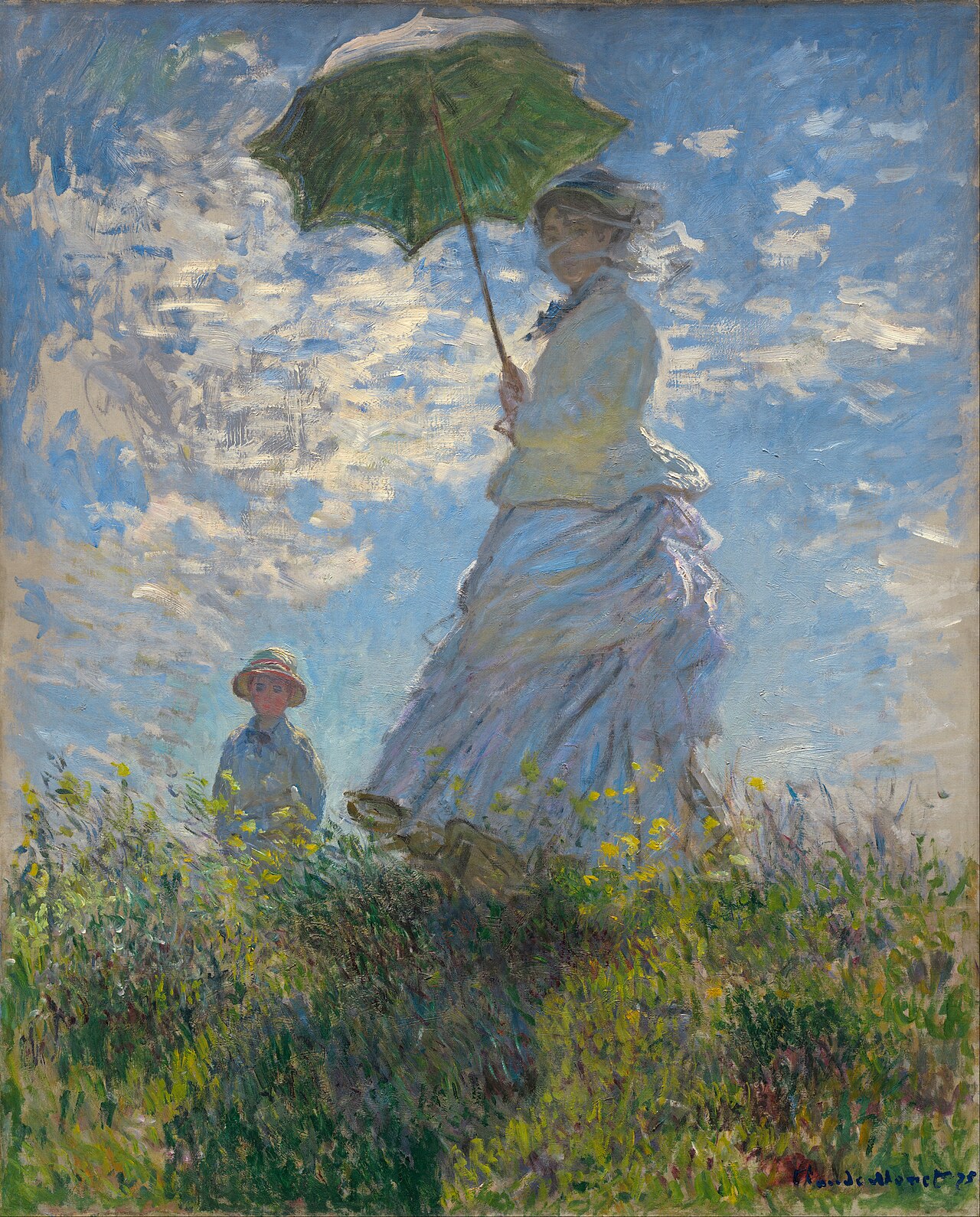 | 100 x 81 cm | Must-See | ||||||||||||
Stacks of Wheat (End of Summer) | Claude Monet | 1890–1891 | Oil on canvas | (5)Published | 검수 완료 | stacks-of-wheat-end-of-summer | On view + | 건초더미 (여름의 끝) | Gallery 243 | Divider | Jul 10, 2026 8:59 AM | 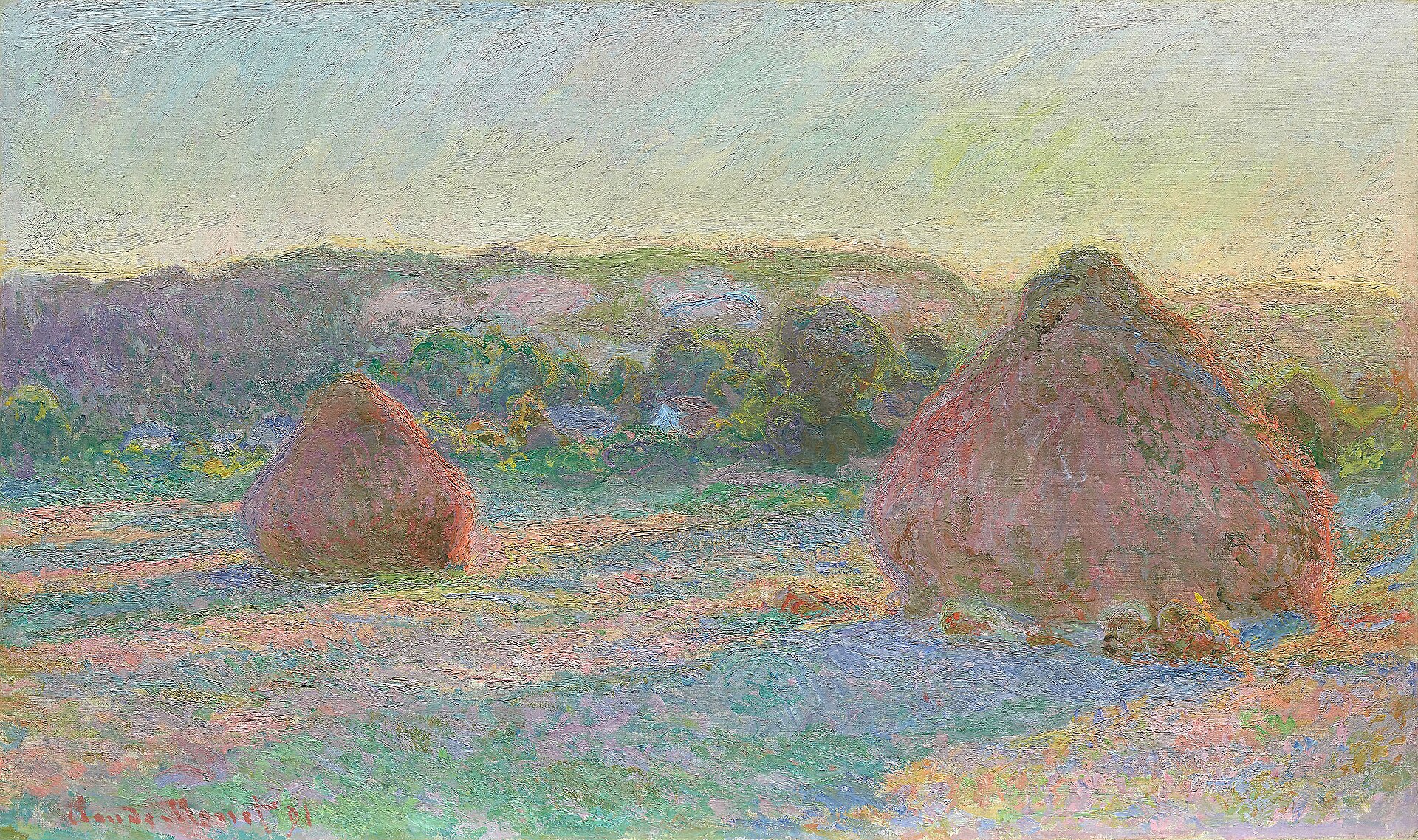 | 60 × 100.5 cm | Must-See | ||||||||||||
Water Lilies | Claude Monet | 1906 | Oil on canvas | (5)Published | 검수 완료 | monet-water-lilies-1906 | Claude Monet found his primary inspiration in the water garden he created in Giverny, France, after purchasing the property in 1890. 'Water Lilies' (1906) represents a midpoint in Monet’s developing style and spatial experimentations. The nearly square format underscores his move away from painting conventional zones of land, sky, and water to focus solely on the water’s surface. Clusters of water lilies at the bottom left and top right frame a watery path, while the surface reflects trees and clouds. Although the dreamlike quality of floating forms might seem to be a natural development for the artist, he considered these works “an obsession,” a sentiment confirmed by technical examinations that revealed many significant changes made to the painting while it was in progress. | Not on view - | 수련 | Divider | Jul 7, 2026 8:39 AM | 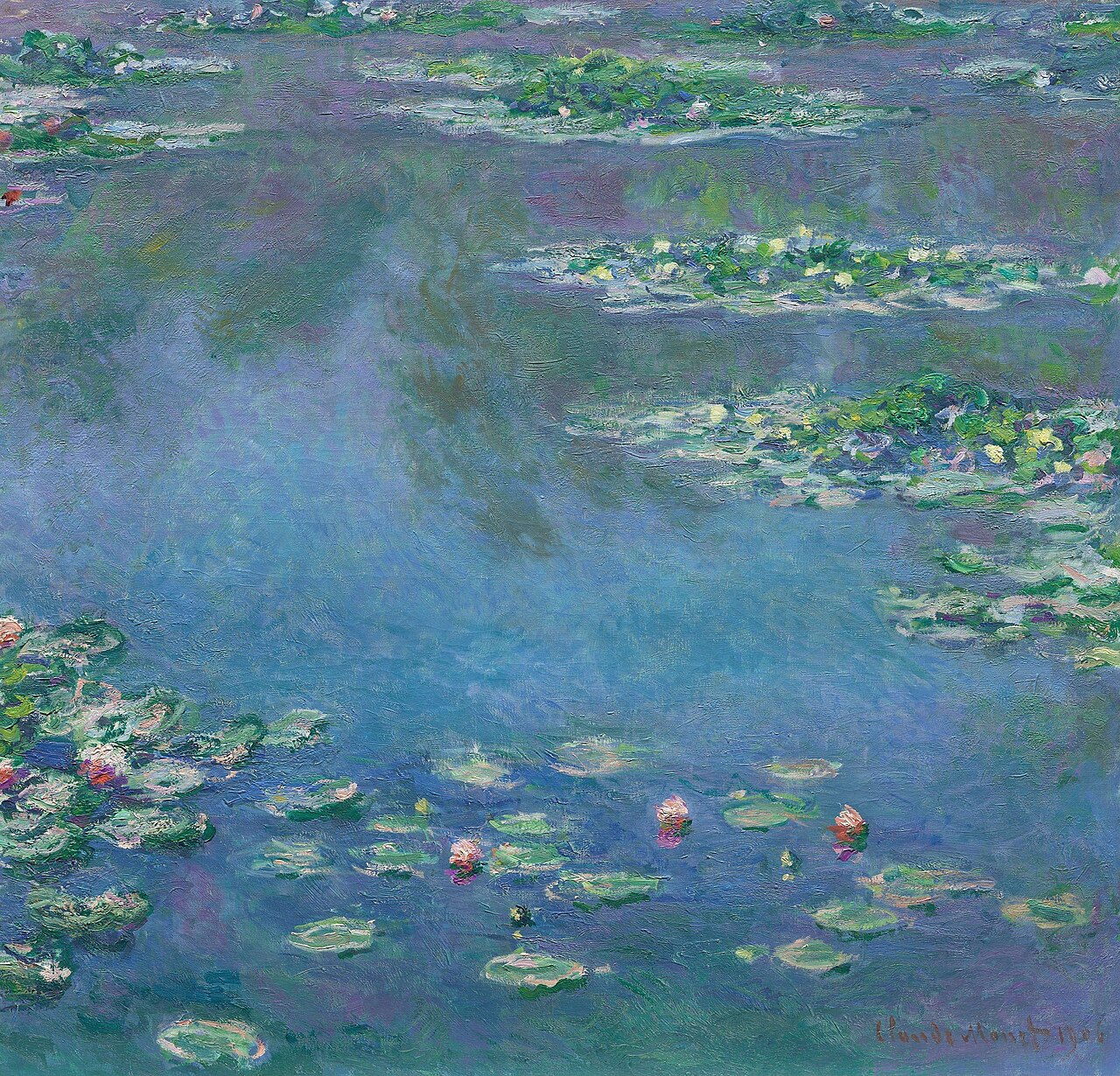 | 89.9 × 94.1 cm | |||||||||||||
Monet's Studio-Boat | Claude Monet | 1874 | Oil on canvas | (5)Published | 검수 중(정보) | monets-studio-boat | Not on view - | 이미지, 설명, 알트 다시 | Le bateau-atelier | 모네의 스튜디오 보트 | Divider | May 22, 2026 5:12 AM | 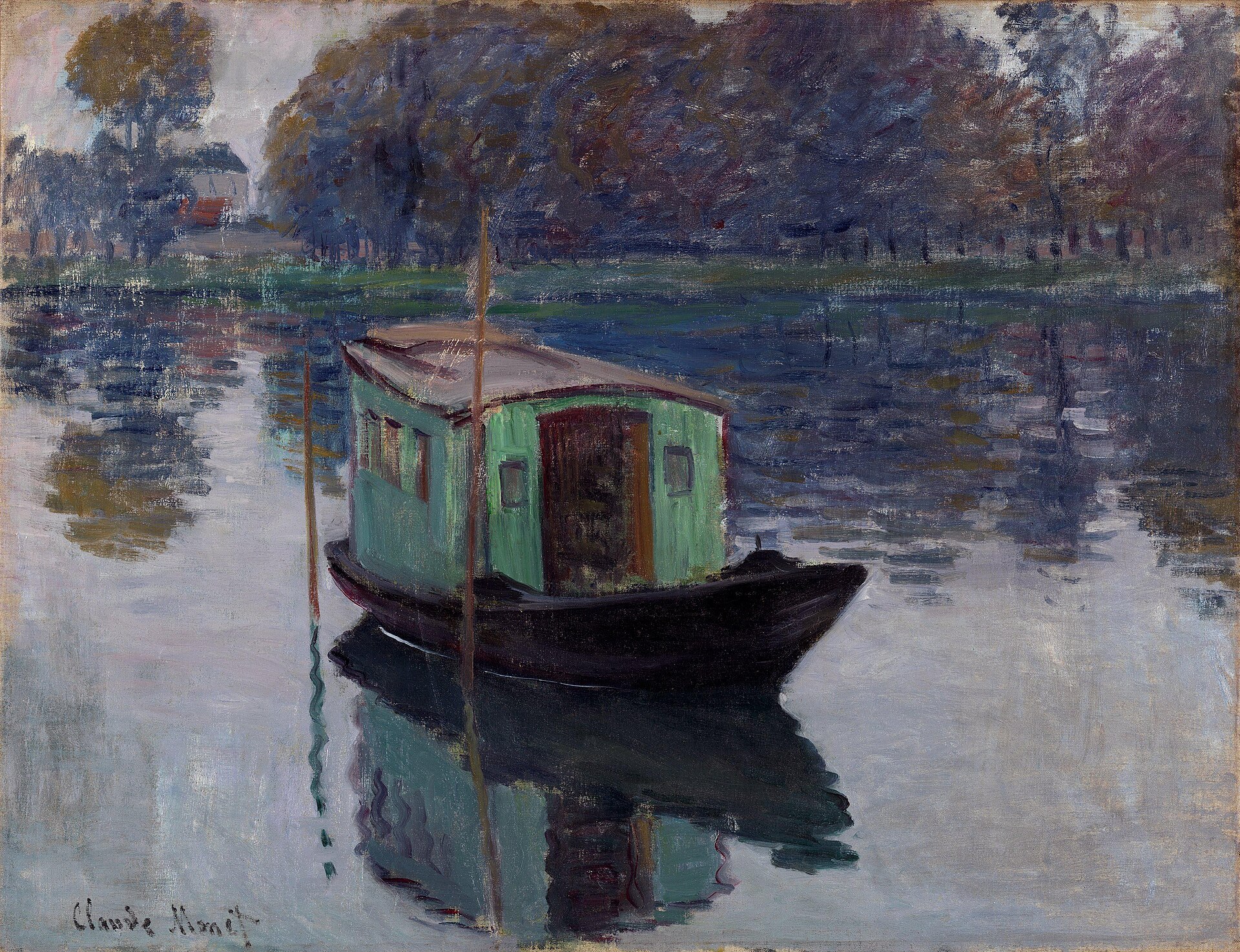 | 50,2 × 65,5 cm | Must-See | |||||||||||
La Cathédrale de Rouen. Le Portail vu de face | Claude Monet | 1892 | Oil on canvas | (5)Published | 검수 완료(이미지) | la-cathdrale-de-rouen-le-portail-vu-de-face | Also titled 'Brown Harmony,' this 1892 work is part of Claude Monet's series capturing the frontal view of the Rouen Cathedral portal. | On View + | 오피셜 설명 없음, 다시 쓸것, 검수해야함, 사진 패드에서 업로드함 | La Cathédrale de Rouen. Le Portail vu de face | 루앙 대성당, 서쪽 입구, 구름낀 날씨 | Upper level, Room 34 | Divider | Mar 27, 2026 6:45 AM |  | 107,0 x 74,0 cm | ||||||||||
La Cathédrale de Rouen. Le Portail, soleil matinal | Claude Monet | 1893 | Oil on canvas | (5)Published | 검수 완료(이미지) | la-cathdrale-de-rouen-le-portail-soleil-matinal | Also titled 'Blue Harmony,' this 1893 work is part of Claude Monet's series capturing the fleeting effects of morning sunlight on the portal of Rouen Cathedral. | On View + | 오피셜 설명 부족, 보완해야함, 태그 다른작품이랑 맞출것 | La Cathédrale de Rouen. Le Portail, soleil matinal | 루앙 대성당, 정문, 아침 햇살의 파랑빛 조화 | Niveau supérieur, Salle 34 | Divider | Mar 27, 2026 6:06 AM |  | 92,2 x 63,0 cm | ||||||||||
Rouen Cathedral: The Portal and the Tour Saint-Romain, Full Sunlight | Claude Monet | 1893 | Oil on canvas | (5)Published | 검수 완료(이미지) | rouen-cathedral-the-portal-and-the-tour-saint-romain-full-sunlight | Also known as 'Blue and Gold Harmony,' this 1893 work captures the Rouen Cathedral's portal and the Tour Saint-Romain under the brilliance of full sunlight. | On view + | 오피셜 설명 없어서 보완해야함 | La Cathédrale de Rouen. Le Portail et la Tour Saint-Romain, plein soleil | 루앙 대성당 : 정문과 생 로맹 탑, 햇살 가득한 파랑빛과 금빛 조화 | Niveau supérieur, Salle 34 | Divider | Mar 27, 2026 4:56 AM |  | 107,0 x 73,5 cm | Must-See | |||||||||
Vénus de Milo | Département des Antiquités grecques, étrusques et romaines, Musée du Louvre | marbre de Paros (lychnites) / ronde-bosse (sculpture) | (5)Published | 검수 완료(이미지) | venus-de-milo | This sculpture is composed of two elements joined at the hips. It originally featured an attached left arm and bronze elements, including a tiara and a bracelet on the right arm. | On view + | Vénus de Milo | 밀로에 비너스 | Sully wing, Level 0, Salle 345 | Divider | Jan 19, 2026 5:48 AM | Must-See | |||||||||||||
The Dance Class | Edgar Degas | 1874 | Oil on canvas | (5)Published | 검수 완료 | the-dance-class | One of Degas's most ambitious dance-themed paintings, this work depicts about twenty-four women—ballerinas and their mothers—attending a class conducted by ballet master Jules Perrot. The scene is set in a rehearsal room of the old Paris Opéra, featuring a poster for Rossini’s Guillaume Tell on the wall, which pays tribute to the singer Jean-Baptiste Faure who commissioned the piece. | On view + | 무용 수업 | The Met Fifth Avenue in Gallery 815 | Divider | Feb 4, 2026 5:02 AM | 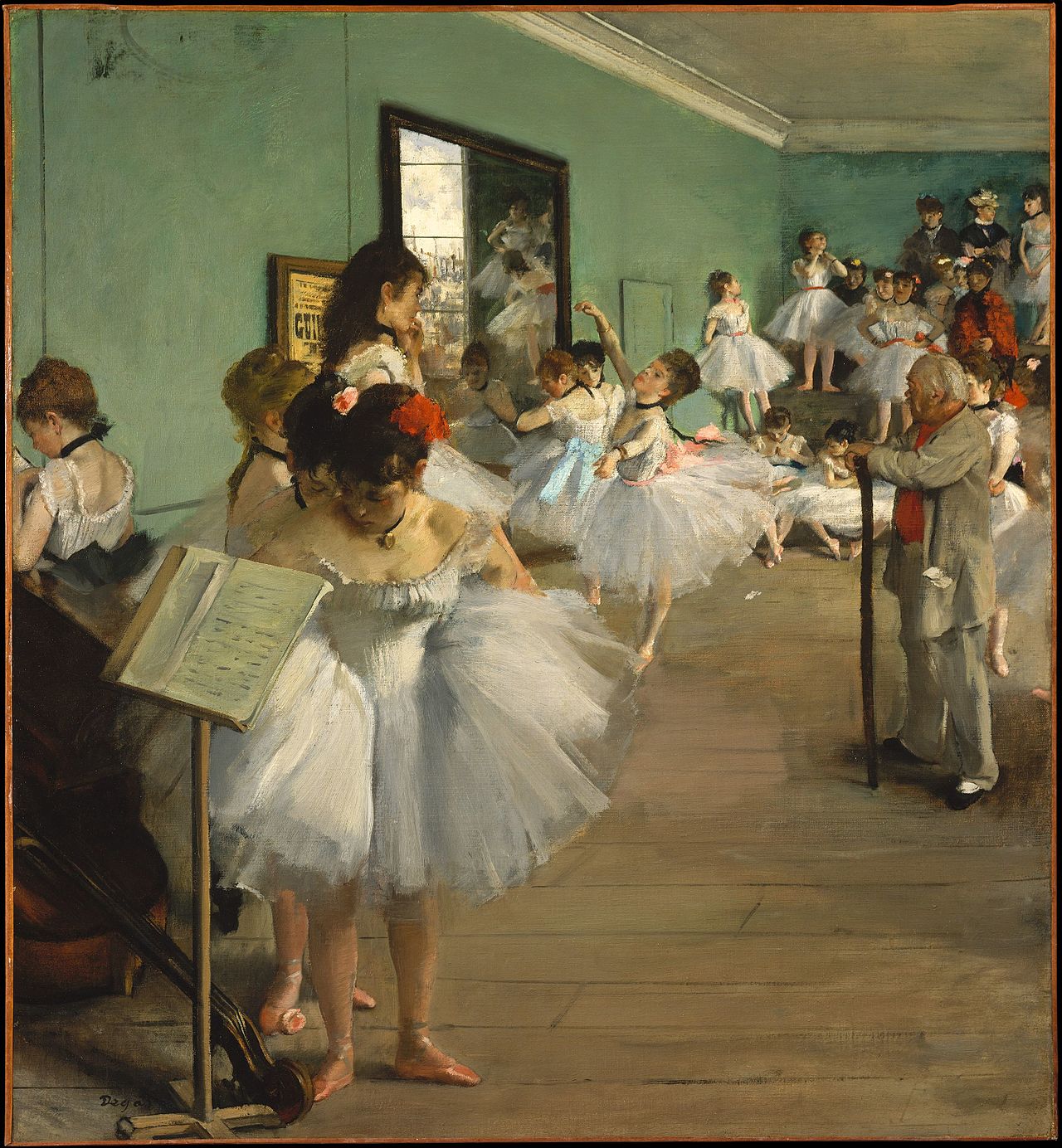 | Must-See | ||||||||||||
Two Dancers | Edgar Degas | c.1905 | Pastel on paper | (5)Published | 검수 완료 | two-dancers | Ballet became a central theme in Degas’s art for several decades following his discovery of the theatrical world around 1870. Trained by Louis Lamothe, a pupil of the famous French Classicist Ingres, Degas had free access as a preferred subscriber of the Paris Opera to the 'Foyer de la Danse,' the dancers' practice room. He obsessively observed and sketched not only the stars or the corps de ballet on and behind the stage but especially the young dancers in training, known as the 'petits rats.' What fundamentally fascinated Degas was the stylized art form of dance and the artificiality of movements that in no way corresponded to reality. This included not only their hard training at the barre but also ordinary gestures like tying shoes or adjusting a costume during breaks. Degas believed that "nothing in art must look like an accident, not even movement." Accordingly, he first studied anatomically correct body postures using nude models before concerning himself with costumes and scenery. The pastel "Two Dancers" is a characteristic example of Degas’s late style. The number of figures is reduced, yet they are conceived as larger and space-filling, with the surrounding environment simplified into a neutral background. Forms are radically simplified, and the luminosity of the colors is intensified. The masterful interplay of multi-layered strokes, which allows the underlying pastel layers and paper to shimmer through, creates a sparkling, mosaic-like impression that brilliantly expresses the glamorous illusory world of the theater. | On view + | 리뉴얼 완료 | Zwei Tänzerinnen | Level 2, The Batliner Collection | Divider | Jan 26, 2026 7:07 AM | 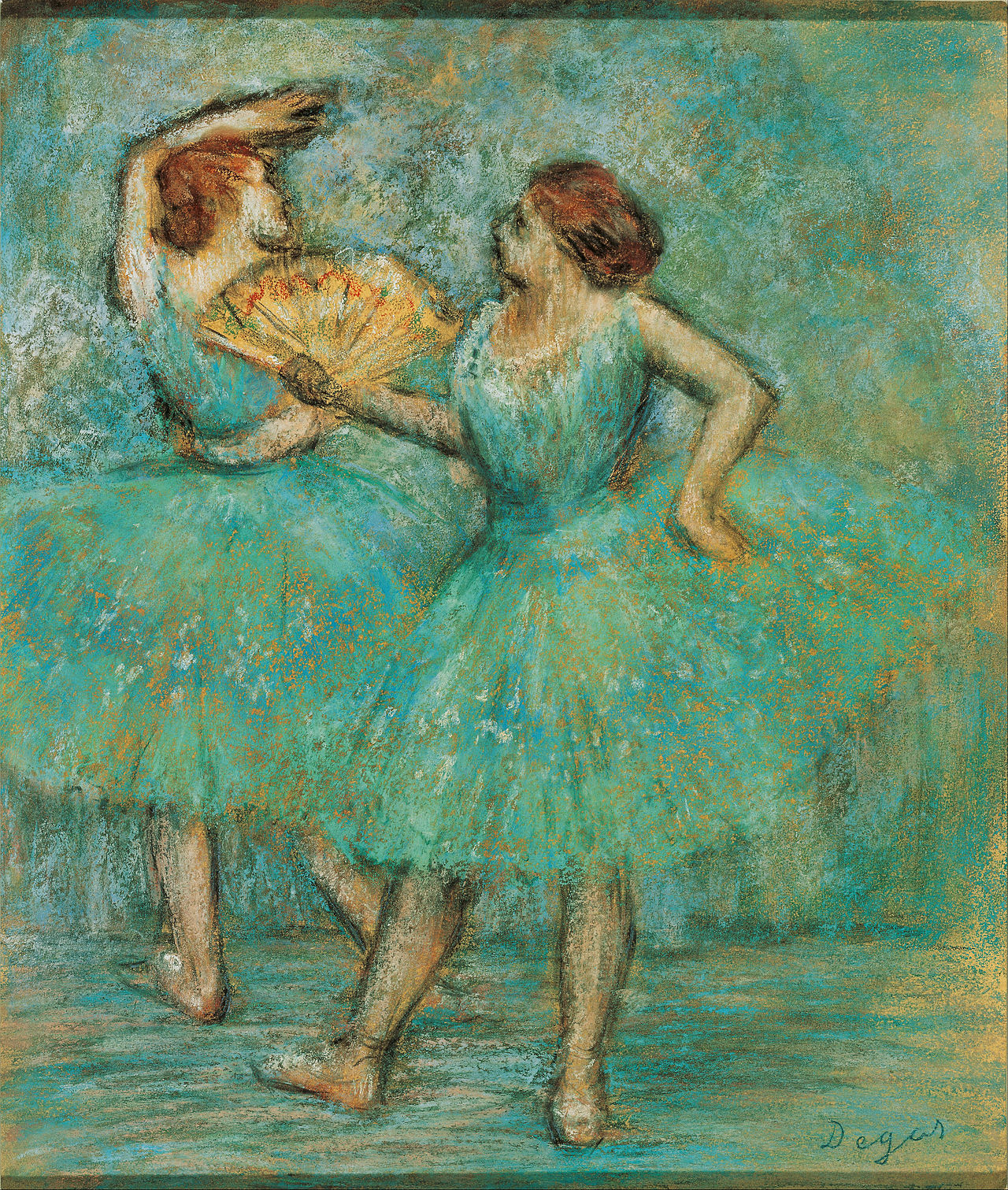 | Must-See | |||||||||||
The Dance Class | Edgar Degas | c. 1873 | Oil on canvas | (5)Published | 검수 중(정보) | degas-the-dance-class-1873 | On view + | 무용 수업 | West Building Main Floor, Gallery M83 | Divider | Jul 17, 2026 8:58 AM | 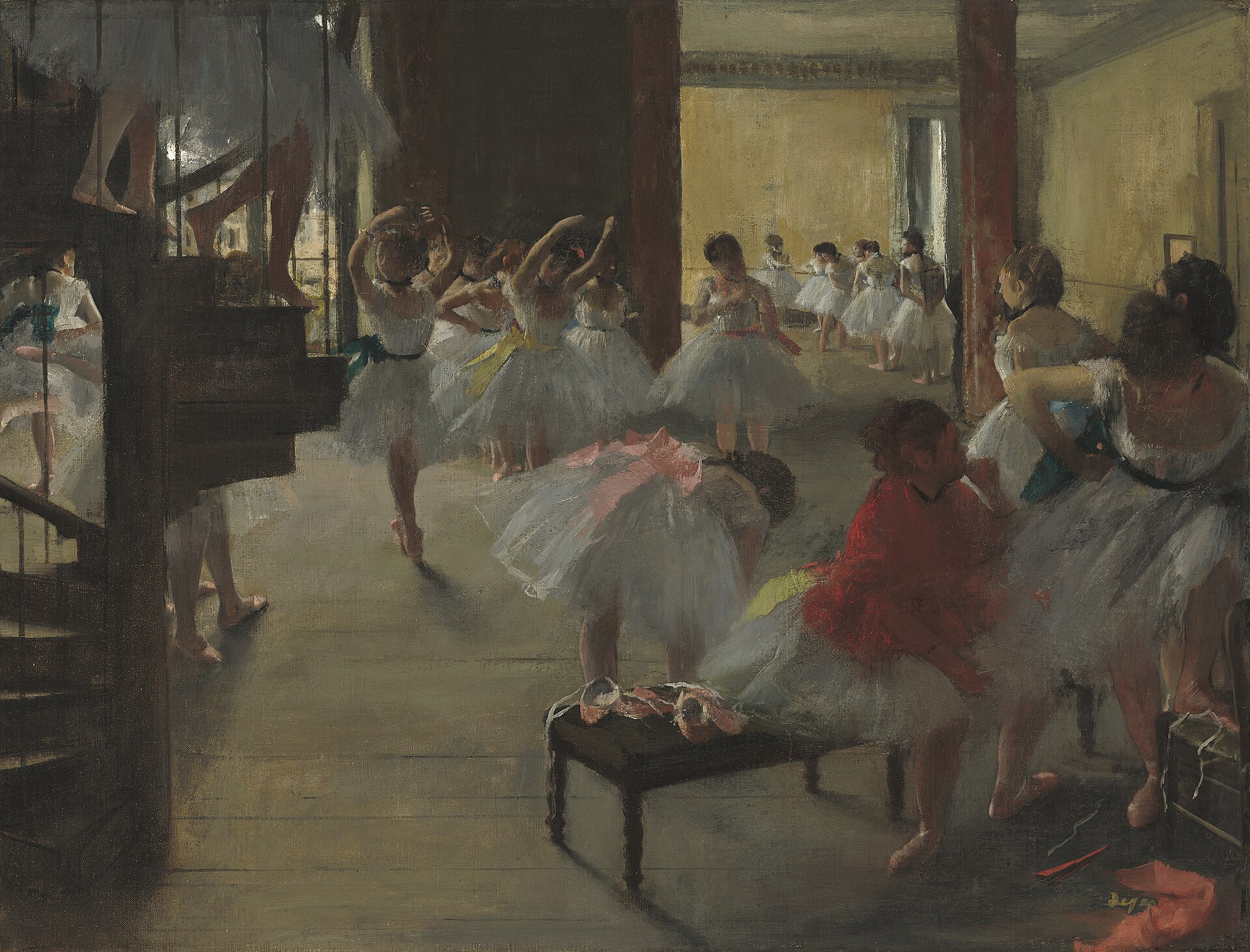 | 47.63 × 62.23 cm | Must-See | ||||||||||||
The Millinery Shop | Edgar Degas | 1879-86 | Oil on canvas | (5)Published | 검수 완료 | the-millinery-shop | Edgar Degas’s 'The Millinery Shop' is the largest of his paintings focused on milliners. Edgar Degas arranged the composition carefully, making multiple drawings and pastels of the lone figure, perfecting the woman’s pose, and experimenting with her outfit. The final composition highlights the visual ambiguities of class identity that arose in France in the late nineteenth century. The woman sits in a hat shop examining a wide-brimmed hat, wearing a fashionable green wool dress with elegant long gloves that could be worn by either wealthy clients or shop employees. At the time, millinery was considered a prestigious trade that required skill and taste, incrementally elevating the young women who succeeded in the business. Edgar Degas addressed this subtle shift in class hierarchy through the subject’s fashion: While her dress is nice enough to be worn by an affluent woman, she does not wear a hat of her own, which would have been expected of a high-class young lady. The artist portrayed this newfound uncertainty playfully by positioning the hat with green trimmings so it seems to sit atop the woman’s head. | On view + | 모자 가게 | Gallery 226 | Divider | Jul 8, 2026 9:21 AM | 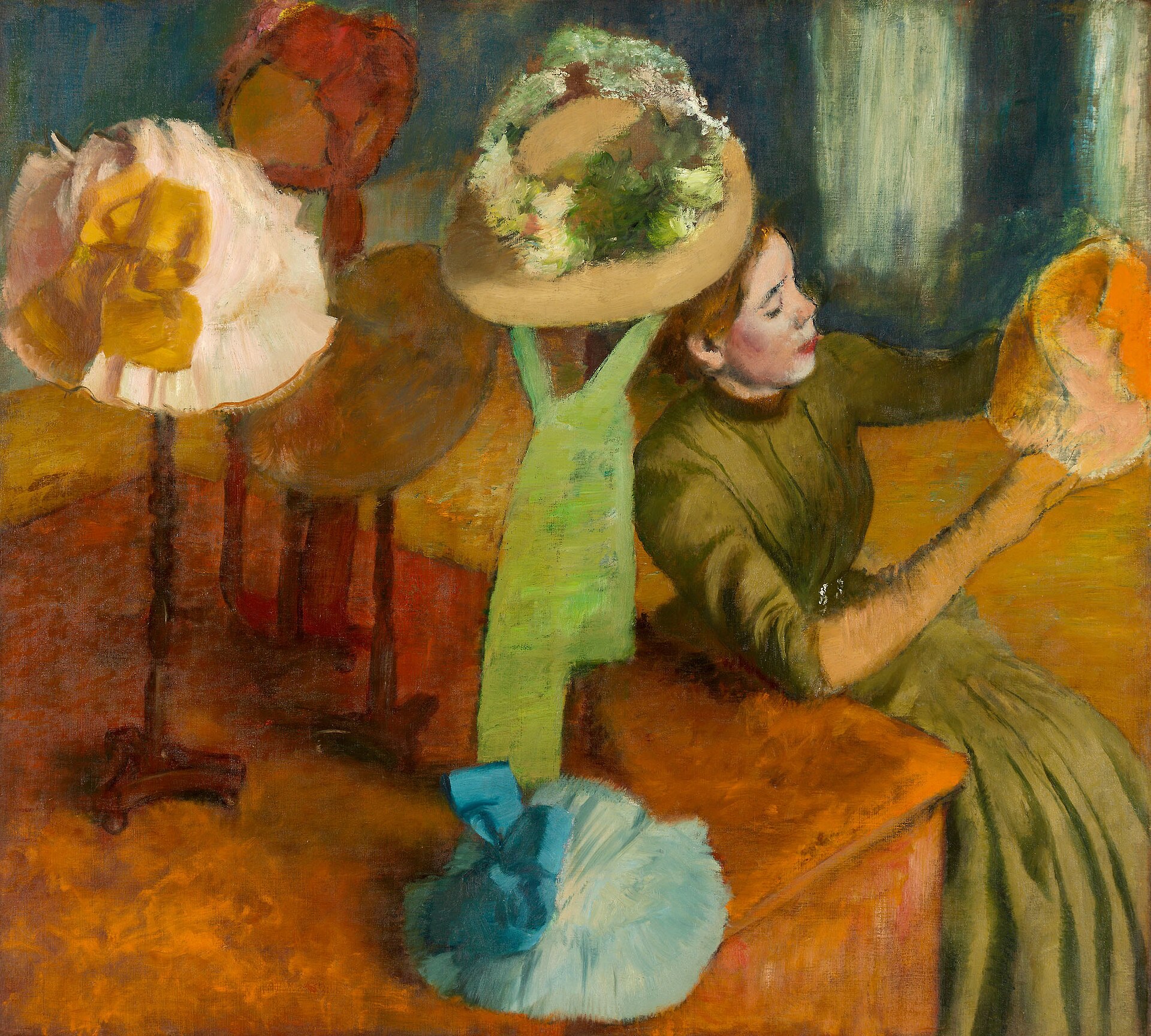 | 100 × 110.7 cm | Must-See | |||||||||||
Plum Brandy | Edouard Manet | c. 1877 | Oil on canvas | (5)Published | 검수 중(정보) | plum-brandy | On view + | 자두 브랜디 | West Building Main Floor, Gallery M89 | Divider | Jul 17, 2026 9:09 AM | 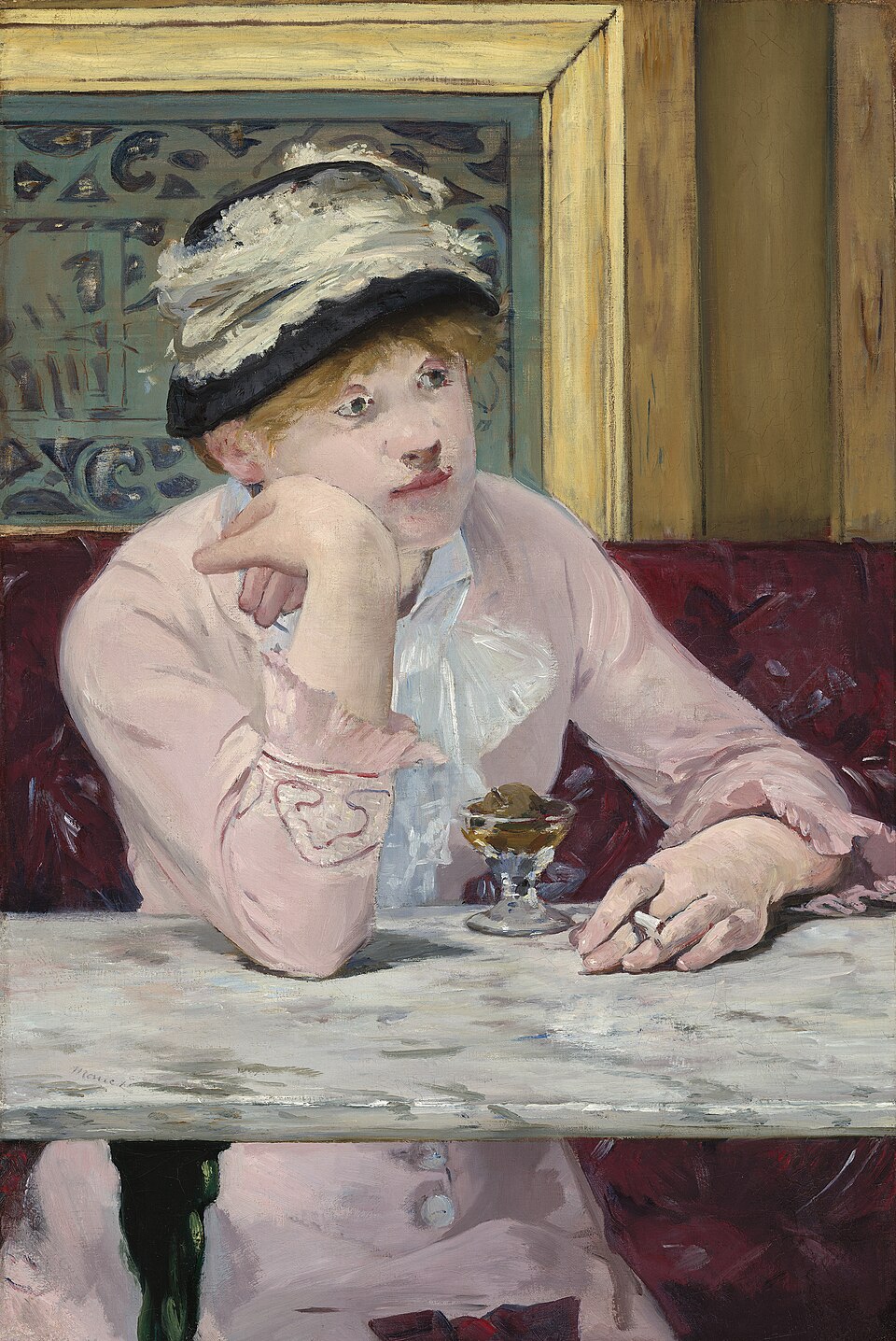 | 73.6 x 50.2 cm | Must-See | ||||||||||||
The Railway | Edouard Manet | 1873 | Oil on canvas | (5)Published | 검수 중(정보) | the-railway | On view + | The Railway | 철도 | West Building Main Floor, Gallery M89 | Divider | Jul 17, 2026 7:22 AM | 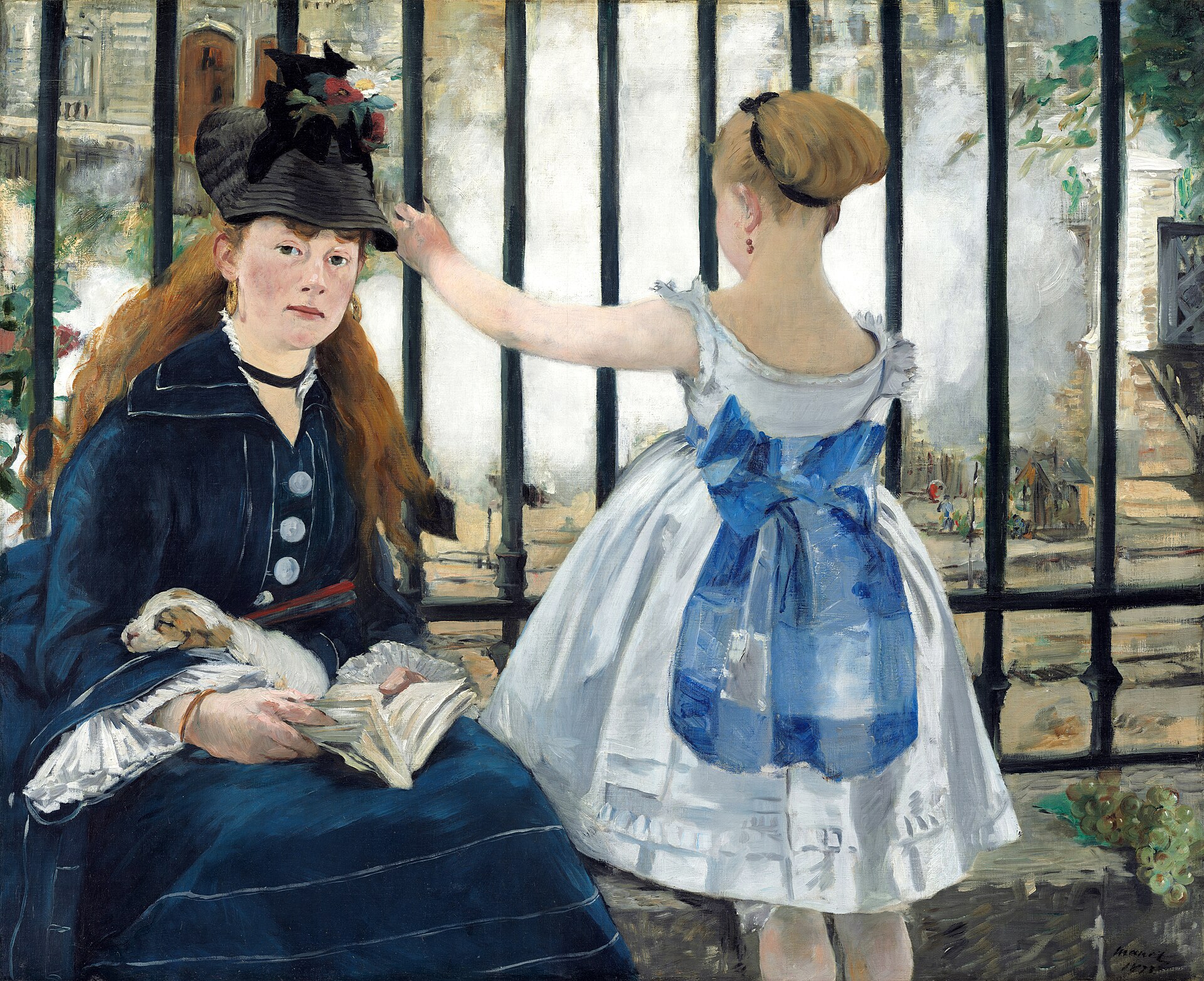 | 93.3 x 111.5 cm | Must-See | |||||||||||
Luncheon on the Grass | Édouard Manet | 1863 | Oil on canvas | (5)Published | 검수 완료(이미지) | luncheon-on-the-grass | Rejected by the 1863 Salon, this painting became a scandal at the Salon des Refusés for its bold departure from tradition. Manet combined classical references with a provocative scene of a nude woman among contemporary clothed men, abandoning subtle gradations in favor of brutal contrasts. By excluding traditional depth and perspective, this work initiated a new freedom in representation and is considered the departure point for Modern Art. | On view + | Le Déjeuner sur l'herbe (Original title: Le Bain) | 풀밭 위의 점심 식사 | Niveau supérieur, Salle 29 | Divider | Jan 20, 2026 4:34 AM | 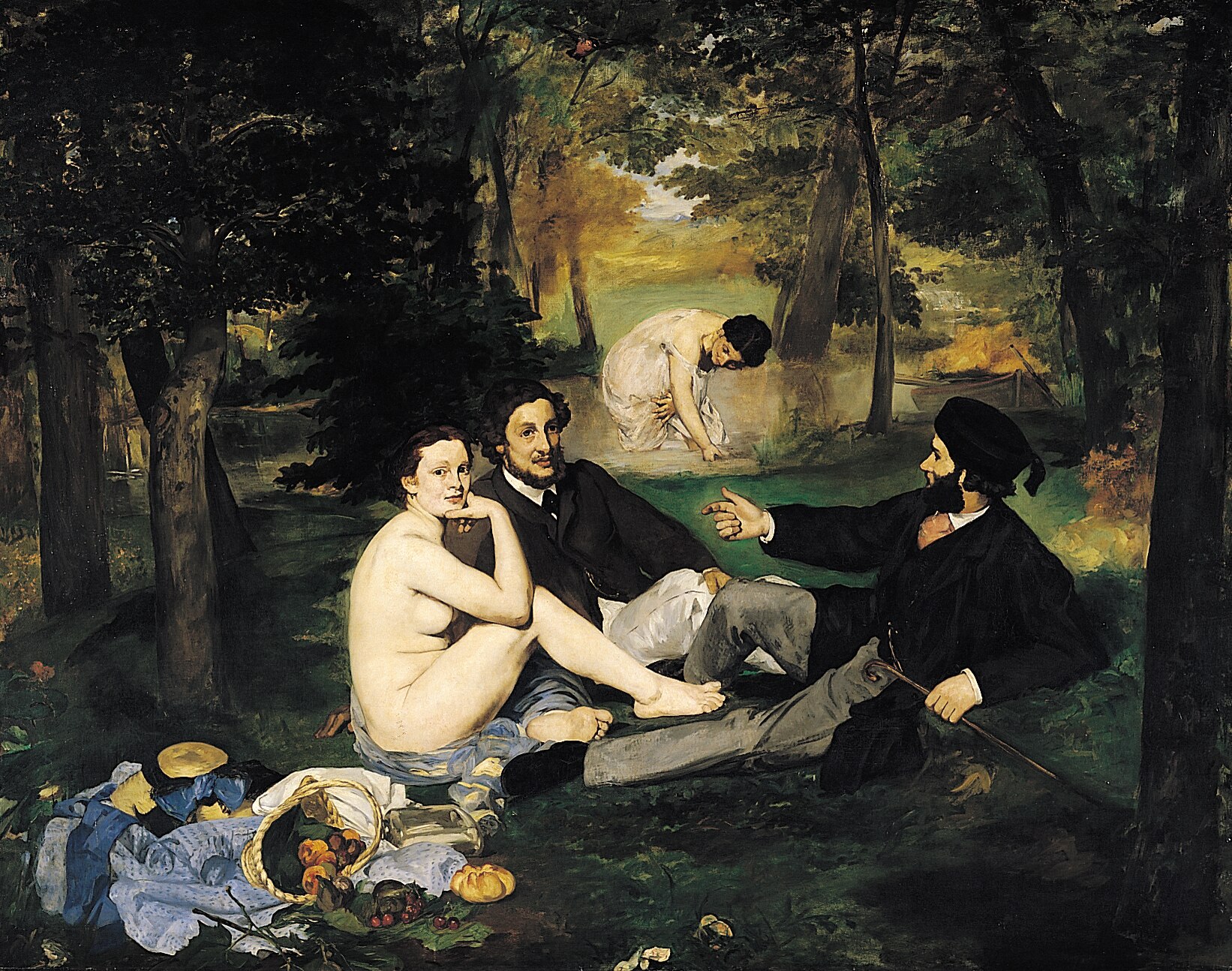 | Must-See | |||||||||||
Squatting Couple (The Family) | Egon Schiele | 1918 | Oil on canvas | (5)Published | 검수 완료 | squatting-couple-the-family | This 1918 masterpiece depicts a naked man, woman, and child huddled in the dark. The man, bearing Schiele's facial features, crouches protectively behind the woman, whose soft curves contrast with his bony physique. Although physically close, the figures appear isolated. Tragically, Schiele's own family never existed; his wife Edith died while six months pregnant on October 28, 1918, followed by the artist three days later. The title "The Family" was first used by art critic Berta Zuckerkandl following these events. | On view + | 긴 설명 완료 / 네비 삽입 완료 | Kauerndes Menschenpaar (Die Familie) | 앉아 있는 커플 (가족) | Divider | Feb 21, 2026 9:06 AM | 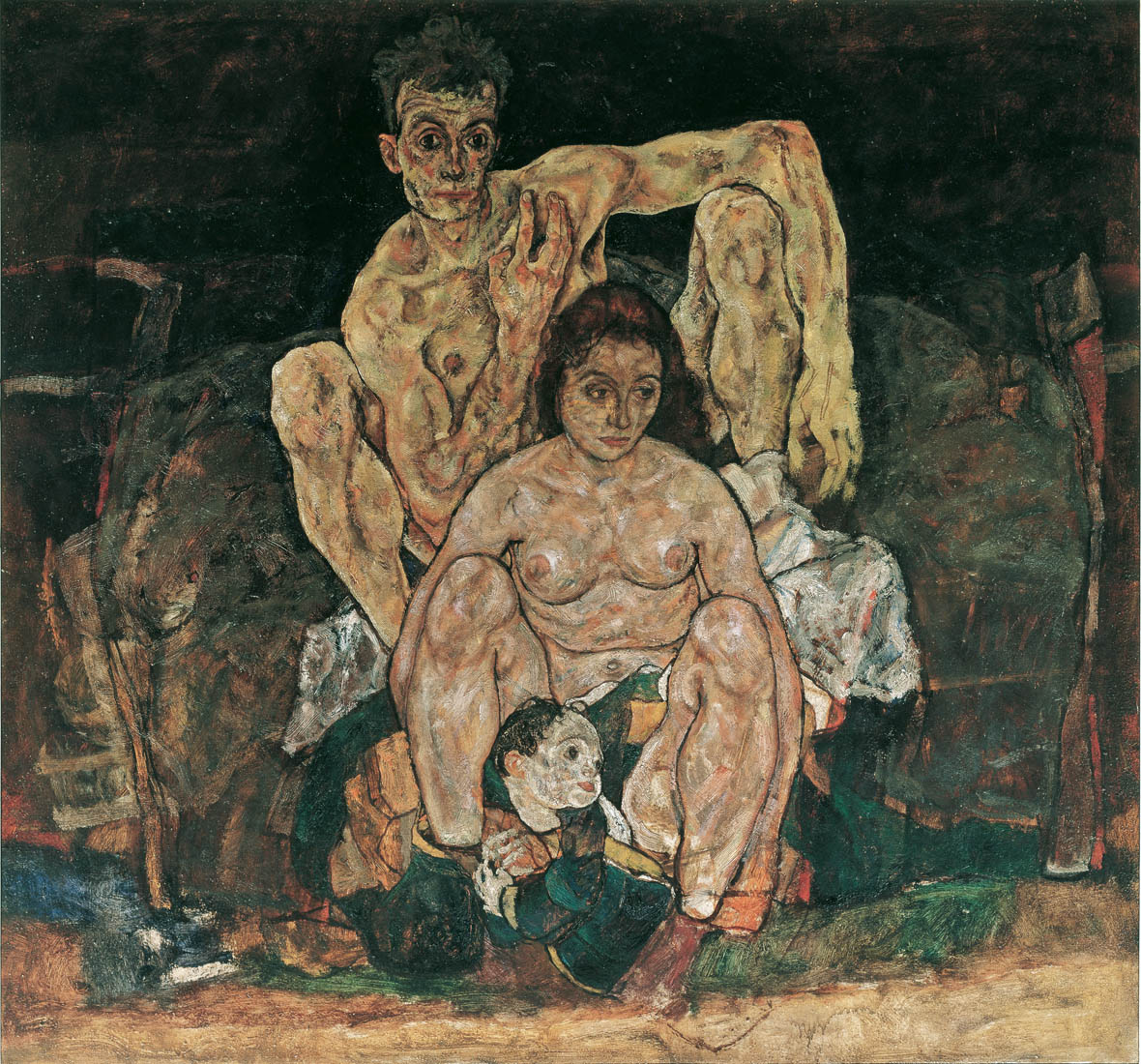 | 150 × 160.8 cm | Must-See | ||||||||||
Death and the Maiden | Egon Schiele | 1915 | Oil on canvas | (5)Published | 검수 완료 | schiele-death-and-the-maiden | In this existential work, Egon Schiele explores themes of transience and death through a biographical lens. The painting depicts a couple in an unstable posture; the young woman, Schiele's long-time partner and model Wally Neuzil, clings to her lover with both arms, while the man—a self-portrait of Schiele—stares into space. Created during the period when Schiele left Neuzil to marry Edith Harms, the fragile balance of the figures suggests a moment on the verge of shattering. | On view + | 긴 설명 완료 / 네비 삽입 완료 | Tod und Mädchen | 죽음과 소녀 | Divider | Feb 21, 2026 8:58 AM | 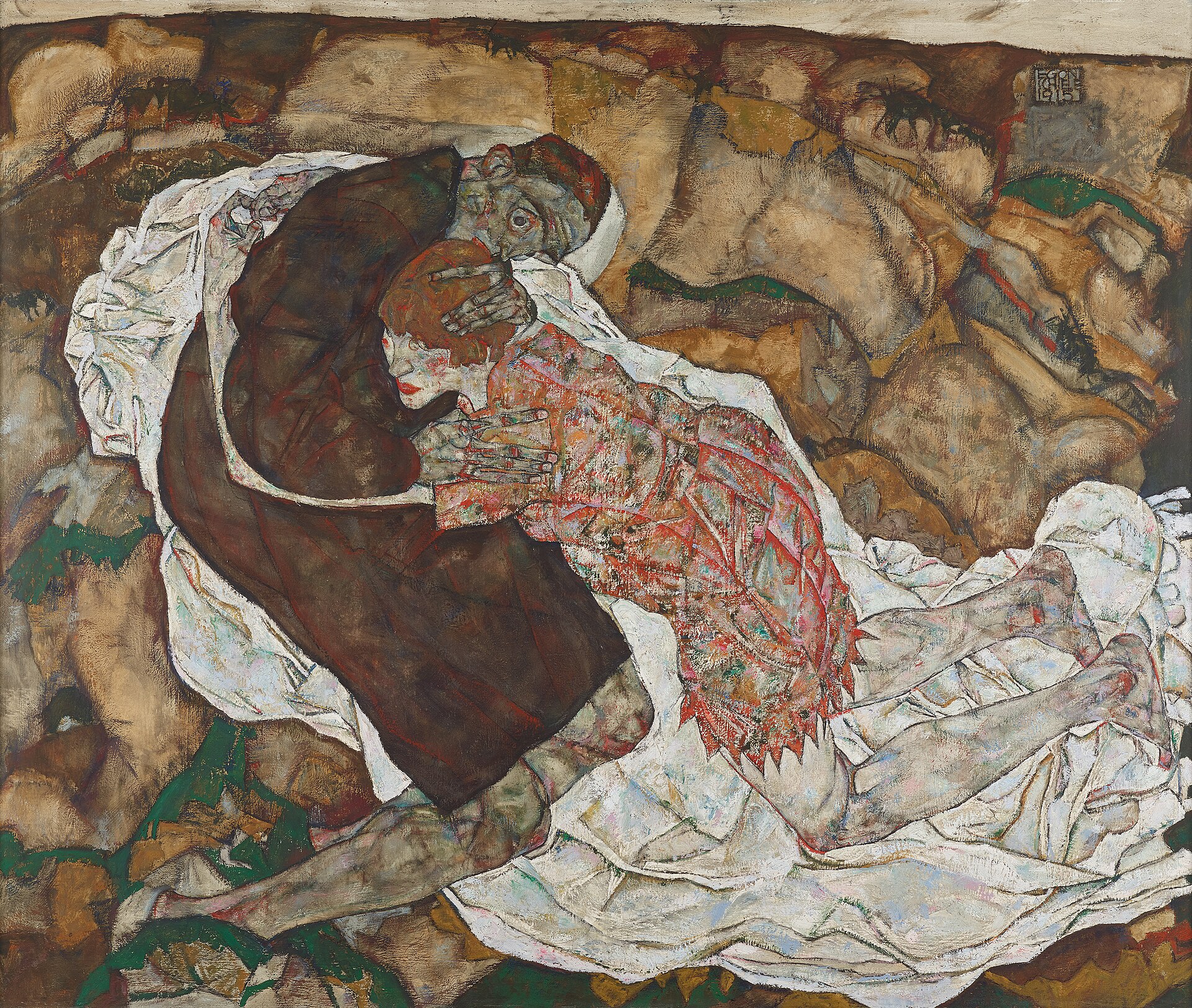 | 150 × 180 cm | Must-See | ||||||||||
Queen Joanna the Mad | Francisco Pradilla y Ortiz | 1877 | Oil on canvas | (4)업로드대기 | 검수 완료(이미지) | prado-masterpiece-juana-la-loca-francisco-pradilla | An absolute masterpiece of historical painting, this work depicts Queen Joanna I of Castile watching over the coffin of her husband, Philip the Handsome. Painted in Rome, it achieved international fame for its "Pradilla style," blending vigorous realism with a romantic vision. The composition masterfully captures the Queen's intense passion, jealousy, and madness amidst a desolate landscape, reinforced by dramatic atmospheric elements like smoke and wind. | Location📍 Museo Del Prado, Room 075 | 간략, 설명, 태그 검수 요망 / 위치 확인완료 | 미친 사랑의 후아나 (후아나 라 로카) | Divider | Feb 11, 2026 8:17 AM | 340 x 500 cm | |||||||||||||
Portrait of Sarah Bernhardt | Georges Clairin | 1876 | Oil on canvas | (5)Published | 검수 완료 | portrait-of-sarah-bernhardt | At the 1876 Salon, this large-scale portrait of the 32-year-old rising star Sarah Bernhardt captured the attention of Parisian critics. Painted by Georges Clairin, her lover and official portraitist for fifty years, the work depicts the bohemian splendour of her new mansion near Monceau Park. Wearing a white satin dress with a studied nonchalance, her sinuous figure and the painting's pearlescent tones heralded the Art Nouveau aesthetic. This portrayal, capturing a feminine presence that is both seductive and disquieting, was a personal favorite of Bernhardt, who kept it throughout her life. Following her death, her son Maurice Bernhardt donated the painting in 1923 to the Petit Palais, where it continues to keep the myth of the great actress alive. | On view + | Portrait de Sarah Bernhardt | 사라 베르나르의 초상 | Room 3 | Divider | Jan 22, 2026 6:27 AM | Must-See | ||||||||||||
A Sunday on La Grande Jatte — 1884 | Georges Seurat | 1884–1886 | Oil on canvas | (5)Published | 검수 완료 | seurat-a-sunday-on-la-grande-jatte-1884 | Georges Seurat aimed to make a painting of modern life equivalent to a classical Greek frieze through 'A Sunday on La Grande Jatte—1884'. The artwork features Seurat's characteristic pointillist technique, where figures and forms dissolve into dots and dashes of complementary colors when viewed closely. Returning to the work two years after its inception, Seurat amplified the silhouettes of certain figures and added others. Some of these additions seem so integral to the final composition that it is difficult to imagine the work without them, while others, such as the man carrying a rolled newspaper in the furthest distance, are barely noticeable. | On view + | A Sunday on La Grande Jatte — 1884 | 그랑드 자트 섬의 일요일 오후 (1884) | Gallery 240 | Divider | Jul 7, 2026 7:39 AM | 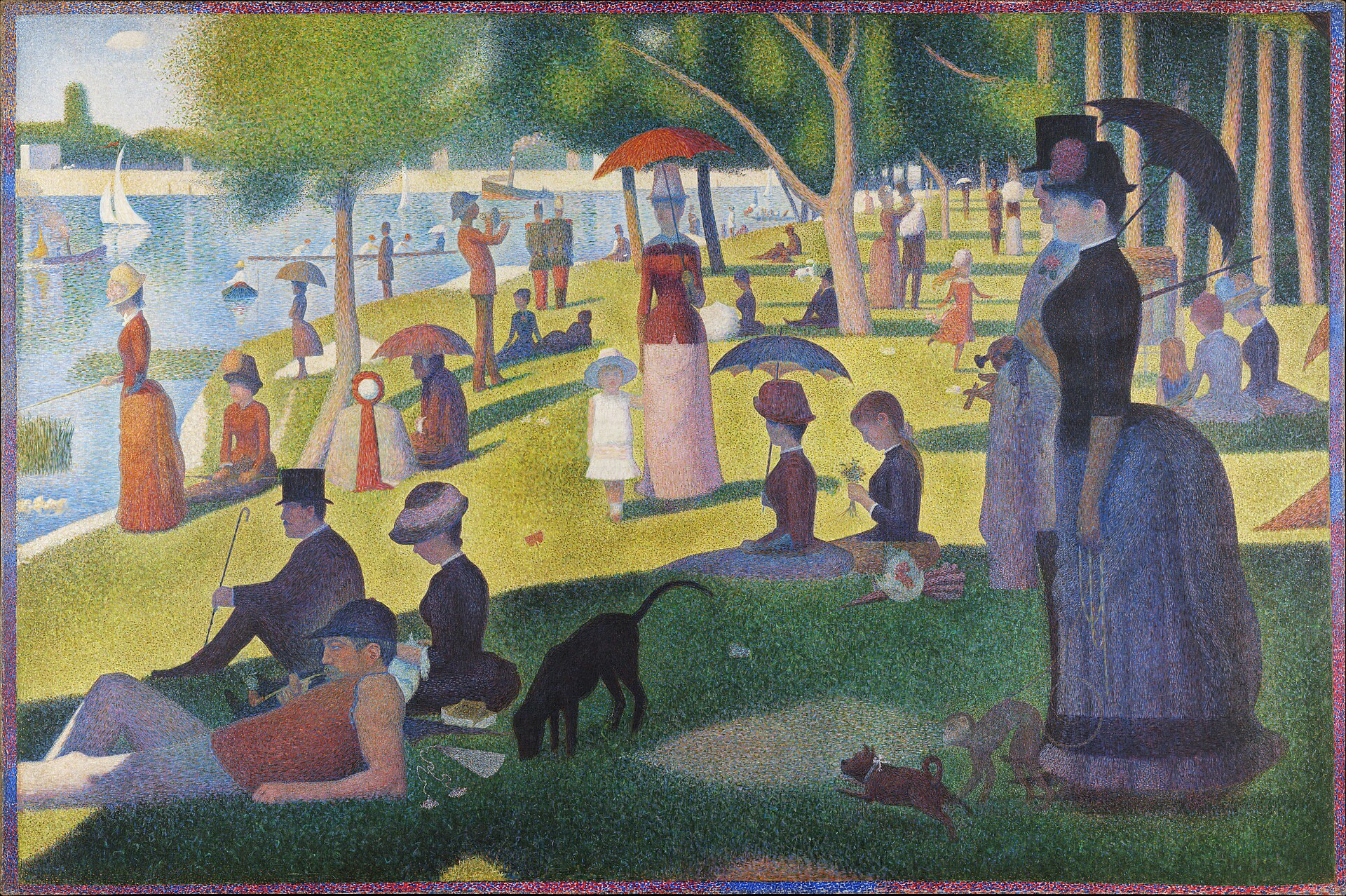 | 207.5 × 308.1 cm | Must-See | ||||||||||
Chahut | Georges Seurat | 1889-1890 | Oil on canvas | (5)Published | 검수 중(정보) | chahut | On view + | 이미지, 설명, 알트 다시 | Chahut | 차후트 | Divider | May 22, 2026 4:45 AM | 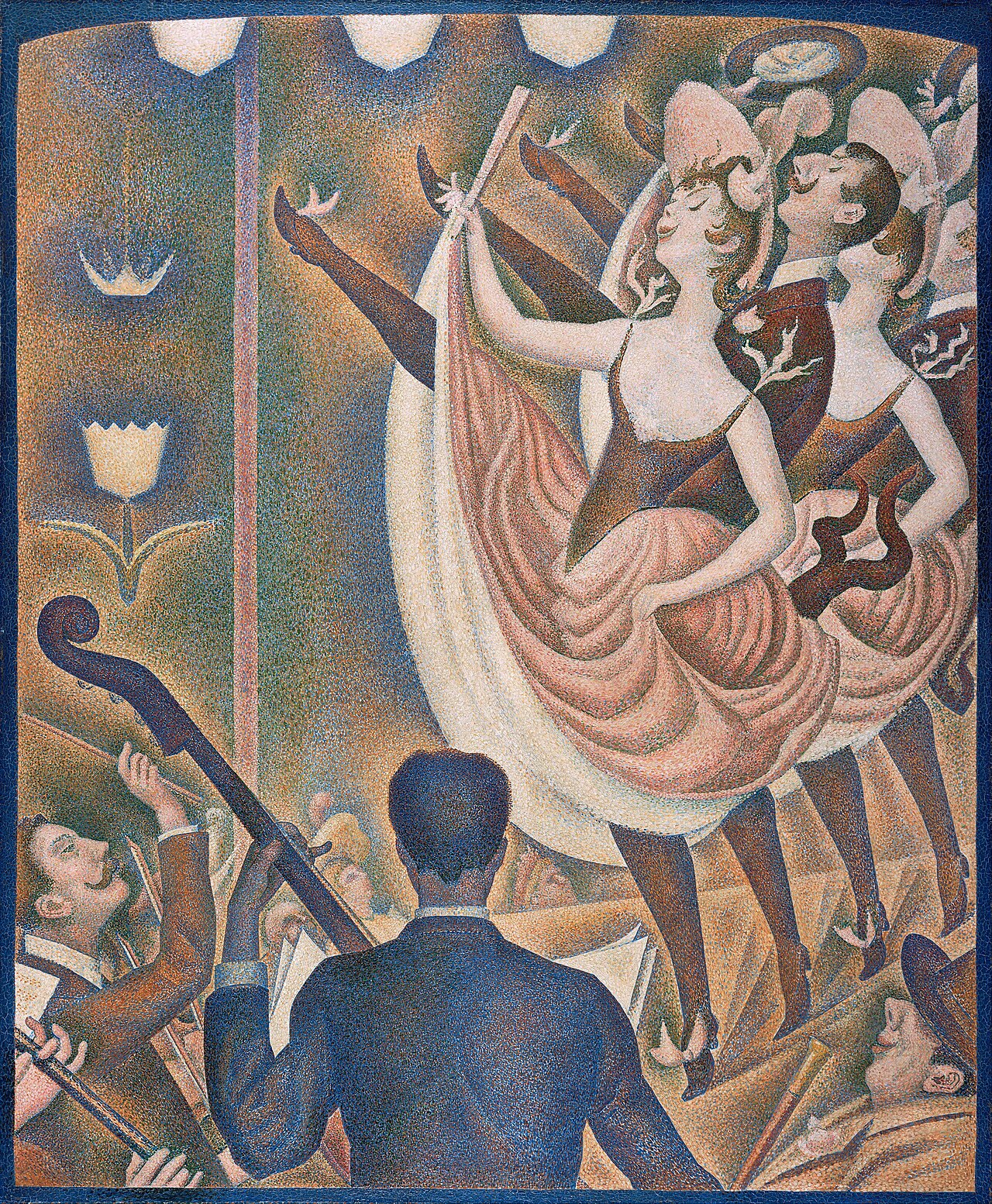 | 170 × 141 cm | Must-See | |||||||||||
Judith | Gustav Klimt | 1901 | Oil and gold leaf on canvas | (5)Published | 검수 완료 | judith | Gustav Klimt reinterprets the biblical heroine Judith as an erotic femme fatale and a seductive icon of femininity. In this 1901 masterpiece, Judith is depicted with a lascivious gaze, half-closed eyes, and a slightly open mouth. She holds the severed head of Holofernes almost tenderly, as if to push it out of the frame. By focusing on Judith’s triumph and the "battle of the sexes," Klimt leaves no room for the male aggressor, transforming the traditional tale of political resistance into a powerful display of dangerous charm. The top of the frame bears the inscription "JUDITH UND HOLOFERNES | On view + | 긴 설명 완료 / 네비 삽입 완료 | Judith | 유디트 | Divider | Feb 21, 2026 8:45 AM | 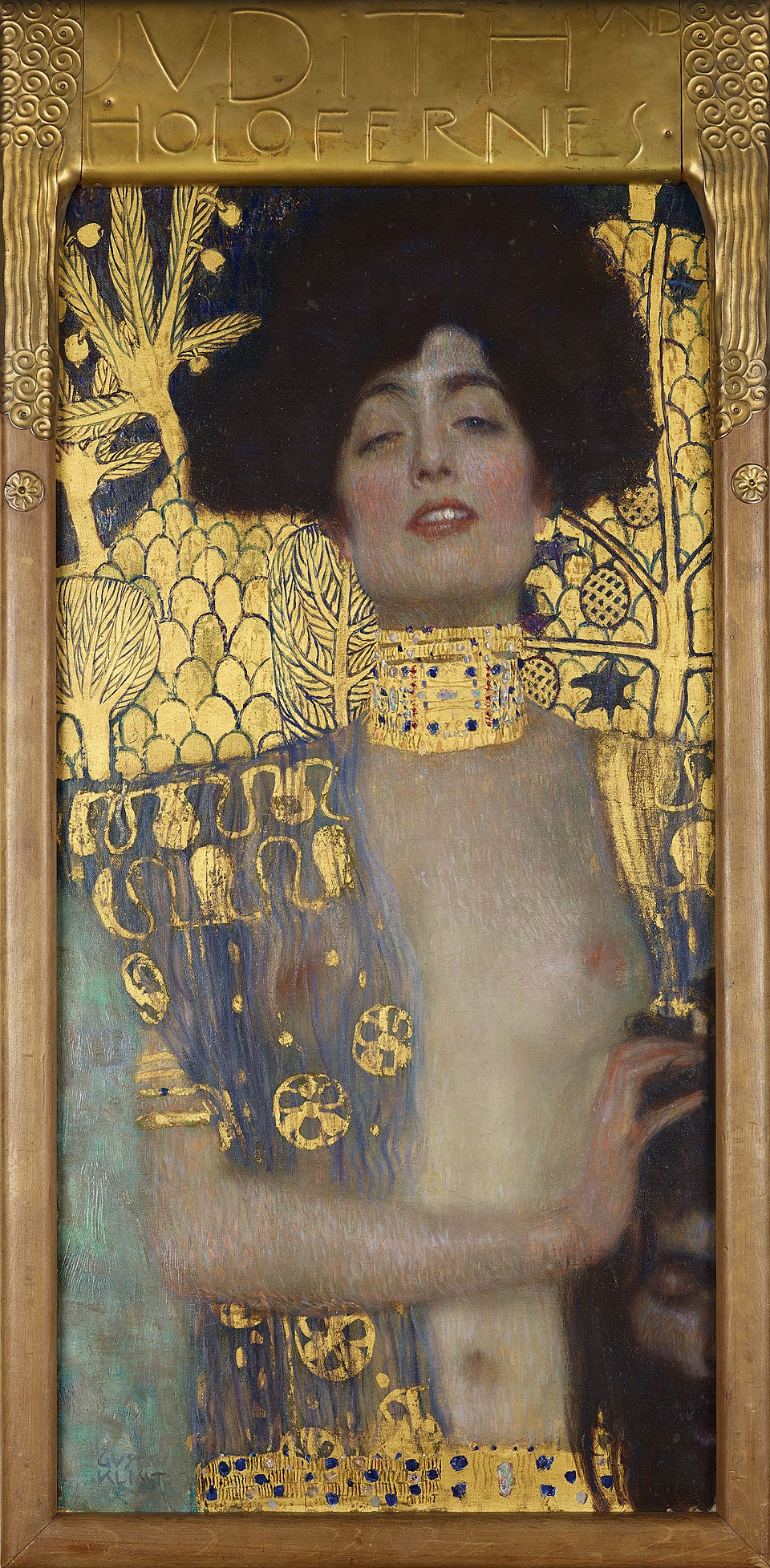 | Must-See | |||||||||||
The Kiss (Lovers) | Gustav Klimt | 1908 (completed 1909) | Oil resin with gold, silver, and platinum leaf on primed canvas; background includes brass (Schlagmetall) and metal leaf flakes. | (5)Published | 검수 완료 | the-kiss-lovers | Painted at the height of his Golden Period, this is Gustav Klimt's most famous work. It depicts a couple fused into a single unity at the edge of a flowery meadow, embraced by a shimmering golden halo. Klimt used genuine gold, silver, and platinum leaf to create the intricate patterns that distinguish the two figures. First exhibited in 1908 under the title "Liebespaar" (Lovers), it was immediately purchased by the Ministry of Art for a high sum and has been known by its world-famous title "The Kiss" since 1909. | On view + | 긴 설명 완료 / 네비 삽입 완료 | Der Kuss (Liebespaar) | 키스 (연인) | Divider | Feb 21, 2026 8:14 AM | 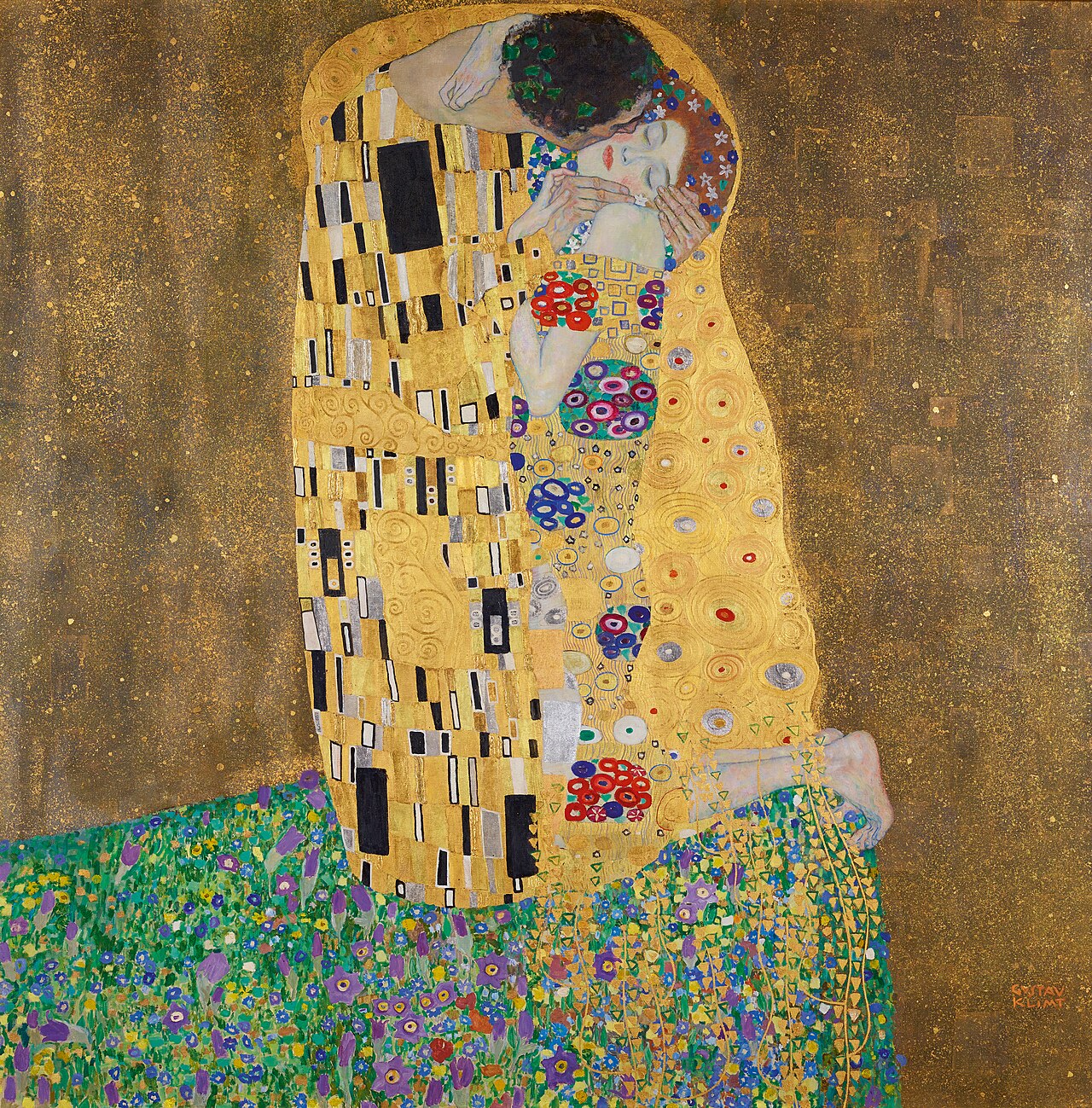 | 180 × 180 cm | Must-See | ||||||||||
Paris Street; Rainy Day | Gustave Caillebotte | 1877 | Oil on canvas | (5)Published | 검수 완료(이미지) | paris-street-rainy-day-study | This preparatory study for the famous painting now in the Art Institute of Chicago was gifted by Caillebotte to Claude Monet. Capturing the intersection of Rue de Turin and Rue de Moscou in Haussmann’s "New Paris," the sketch features a freer and less smooth style than the final version. The composition is divided by a lamppost, with a couple under a large umbrella on the right, utilizing cold tones and strong perspective to reflect Caillebotte’s modernity. This cherished work remained in Monet's bedroom until his death. | On view + | Rue de Paris. Temps de pluie | 파리의 거리, 비 오는 날 | Level 1, Monet Gallery | Divider | Jan 21, 2026 7:11 AM | 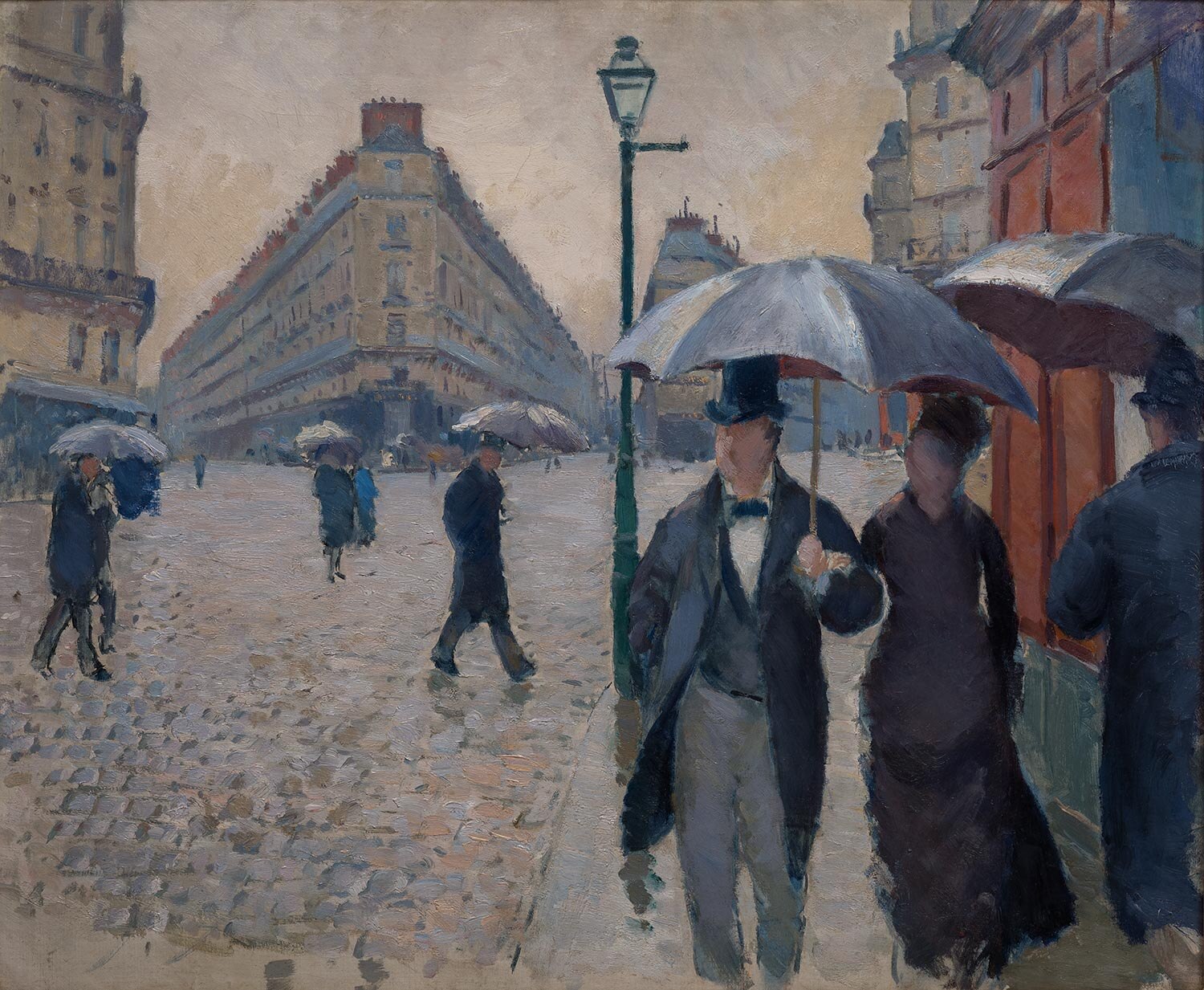 | Must-See | |||||||||||
Paris Street; Rainy Day | Gustave Caillebotte | 1877 | Oil on canvas | (5)Published | 검수 완료 | paris-street-rainy-day | 'Paris Street; Rainy Day' is Gustave Caillebotte’s largest and most ambitious work. Caillebotte captured a busy intersection of Paris that was only a short walk from his home. While he demonstrated his affinity with the Impressionists through the subject of modern urban life, Caillebotte approached these settings with a more Realist technique. The dramatic cropping of the scene may have been inspired by the newly popularized medium of photography; the two central figures seem to be walking straight into the viewer as something captures their attention outside of the frame. At the time, artists rarely attempted to depict people in motion; Caillebotte carefully placed each of the background figures to evoke the feeling of bustling city streets. Instead of explicitly painting raindrops, he suggested the atmosphere through the incorporation of newly available retractable umbrellas and the subtle reflections on the wet cobblestones. | On view + | 파리의 거리, 비 오는 날 | Gallery 201 | Divider | Jul 8, 2026 5:04 AM | 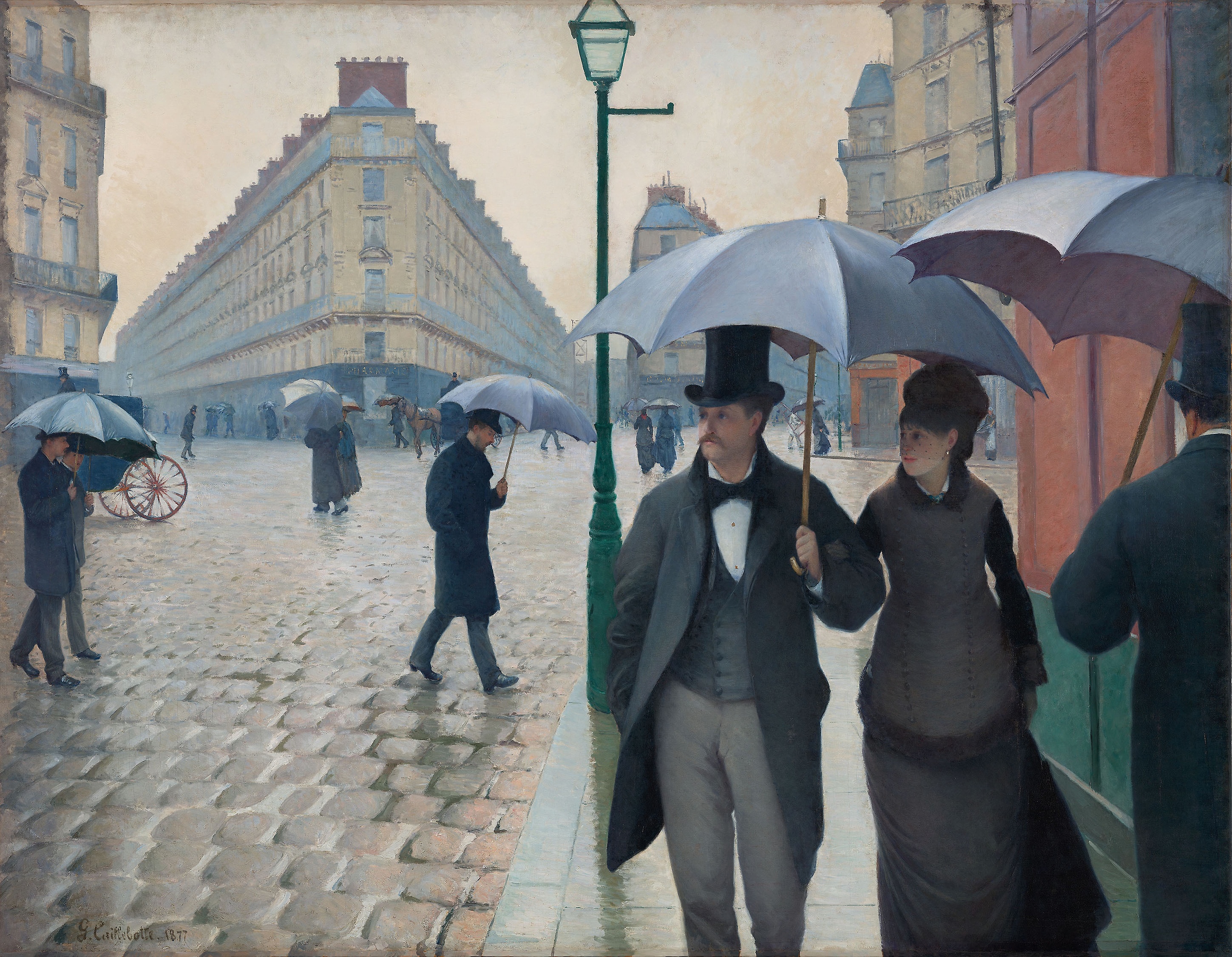 | 212.2 × 276.2 cm | Must-See | |||||||||||
Young Ladies on the Banks of the Seine (Summer) | Gustave Courbet | 1857 | Oil on canvas | (5)Published | 검수 완료 | young-ladies-on-the-banks-of-the-seine-summer | Exhibited at the 1857 Salon, where it unleashed a critical scandal, this work depicts young women who have come out from the city on a hot summer's day to cool off by the waterside. The realism of this highly sensual scene is manifest in the frankness of the faces and postures. Unique for its combination of a modern subject and an unusually large format for a genre scene, the work broke away from the conventions of the day. This modern subject, presented by the ever-provocative Courbet, prefigures the future popularity of the banks of the Seine, which would be celebrated by the Impressionists a generation later. | On view + | Les demoiselles des bords de la Seine (été) | 세느 강변의 젊은 여인들 (여름) | Room 5 | Divider | Jan 22, 2026 6:26 AM | Must-See | ||||||||||||
The Three Sisters | Henri Matisse | 1917 | oil on canvas | (5)Published | 검수 완료 | the-three-sisters | This portrait of three sisters is one of Henri Matisse's masterworks, featuring three young brunettes seated before a bistre background. While two of the young women look out at the viewer, the third is absorbed in her reading, showcasing their different attitudes. The painter successfully creates a perfect balance between seemingly incompatible elements, such as discordant colors and the impression of juxtaposed levels of perspective. The work was inspired by multiple sources, including Manet's paintings, Japanese engraving, and the painting Les dames de Gand (The Three Gand Ladies) conserved at the Louvre, which was attributed to Jacques-Louis David at the time. Matisse's interest in this subject was expressed many times, leading to several versions; notably, three other paintings of the three sisters are conserved at the Barnes Foundation in Philadelphia. This particular version in the Musée de l'Orangerie was one of the few works Paul Guillaume purchased at a public sale. It is highly likely he acquired it in memory of the other paintings of the sisters he had previously ceded to Doctor Barnes while helping build his collection. | Not on view - | Les Trois Soeurs | 세 자매 | Niveau -2, Salle 11 | Divider | Jan 27, 2026 7:45 AM | 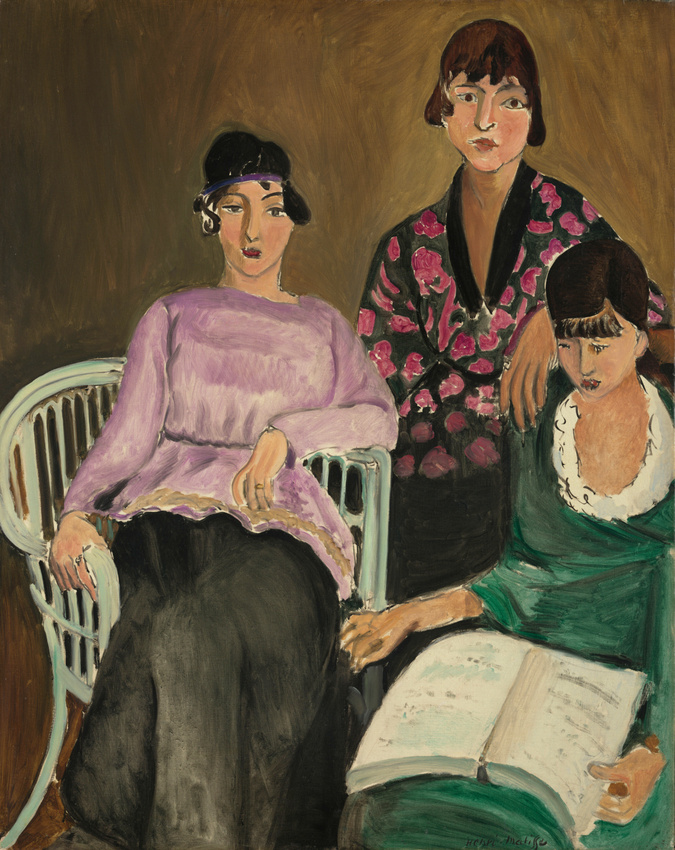 | Must-See | |||||||||||
The Coronation of the Emperor Napoleon I and the Empress Josephine in the Notre-Dame Cathedral of Paris, December 2, 1804. | Jacques-Louis David (Main Artist), Georges Rouget (Participation), Ignazio Eugenio Degotti (Participation) | 1807 | Oil on canvas | (5)Published | 검수 완료(이미지) | the-coronation-of-napoleon | Commissioned by Napoleon I, this monumental painting (6.21m x 9.79m) captures the moment the Emperor prepares to place the crown on Empress Josephine's head. It features approximately 190 figures, including Pope Pius VII, and was painted in David’s studio at the former Cluny College. | On view + | Le Couronnement de l'empereur Napoléon Ier et de l'impératrice Joséphine dans la cathédrale Notre-Dame de Paris, le 2 décembre 1804. | 나폴레옹 1세의 대관식 (또는 황제 나폴레옹 1세와 황후 조제핀의 대관식) | Denon Wing, Level 1, Salle 702 (Salle Daru) | Divider | Jan 19, 2026 5:49 AM | |||||||||||||
The Gleaners | Jean-François Millet | 1857 | Oil on canvas | (5)Published | 검수 완료(이미지) | the-gleaners | This painting depicts three women from the rural working class performing the back-breaking task of gleaning. Millet juxtaposes the three phases of their movement—bending, picking up, and straightening—accentuating their sculptural forms with the slanting light of the setting sun. Their stark austerity contrasts with the abundant harvest, haystacks, and busy crowd of harvesters visible in the hazy golden distance. | On view + | Des glaneuses | 이삭 줍는 사람들 | Rez-de-chaussée, Salle 4 | Divider | Jan 19, 2026 9:10 AM | 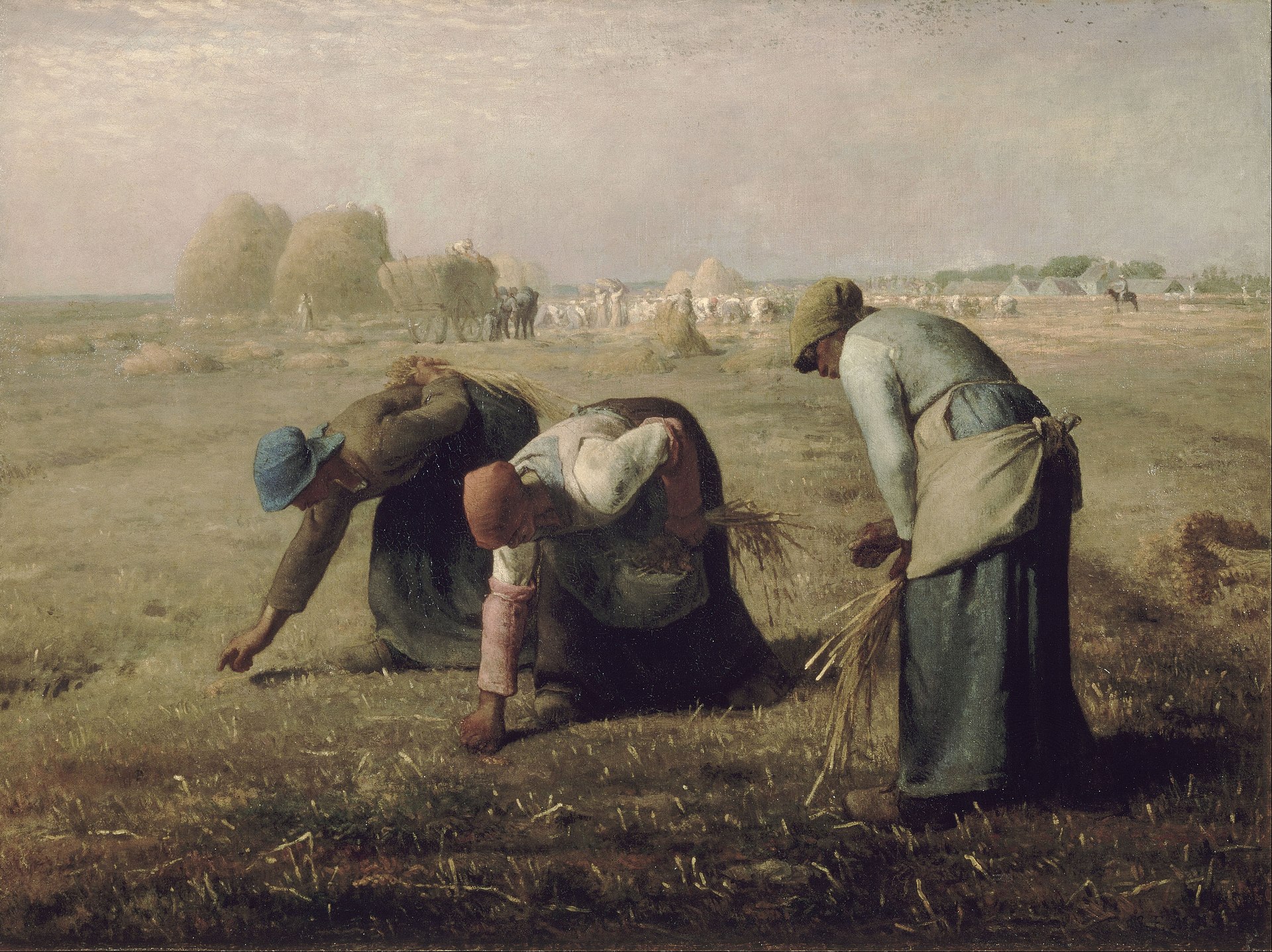 | Must-See | |||||||||||
And They Still Say Fish Is Expensive! | Joaquín Sorolla y Bastida | 1894 | Oil on canvas | (5)Published | 검수 완료(이미지) | and-they-still-say-fish-is-expensive | Produced in 1894, this emblematic work is a masterpiece of Spanish social realism, earning Sorolla a First Medal at the 1895 National Exhibition. The subject and title were inspired by the tragic concluding scene of Vicente Blasco Ibáñez’s novel Flor de mayo, reflecting the harsh reality of seafaring life. Set in the confined interior hold of a fishing boat, the composition depicts a young fisherman lying on the floor after a maritime accident. While two older sailors—one in a traditional barretina—tenderly treat his wound, the scene transcends mere reportage to evoke the dramatic solemnity of a secular pietà. Sorolla imbues the figures with a noble gravity, a quality critics later compared to the influence of Velázquez. The painting’s power lies in its daring spatial design and mastery of luminosity. Light streams through the boat’s hatch, softly illuminating the hold and culminating in the silvery reflections of freshly caught fish piled in the background. A modern, sharp-angled framing shifts the perspective, revealing the stairs down which the boy was carried and heightening the spatial tension of the enclosed setting. Although adhering to the formal rigors of strict naturalism with firm, descriptive drawing, the powerful presence of the figures, who dominate the composition relative to the canvas size, creates a profound sense of solemnity that anticipates the innovative painterly language of Sorolla's later oeuvre. | On view + | 간략, 설명, 태그 검수 요망 / 위치 확인완료 | Aún dicen que el pescado es caro! | 그래도 그들은 생선이 비싸다고 말한다! | Room 061A | Divider | Feb 11, 2026 8:44 AM | 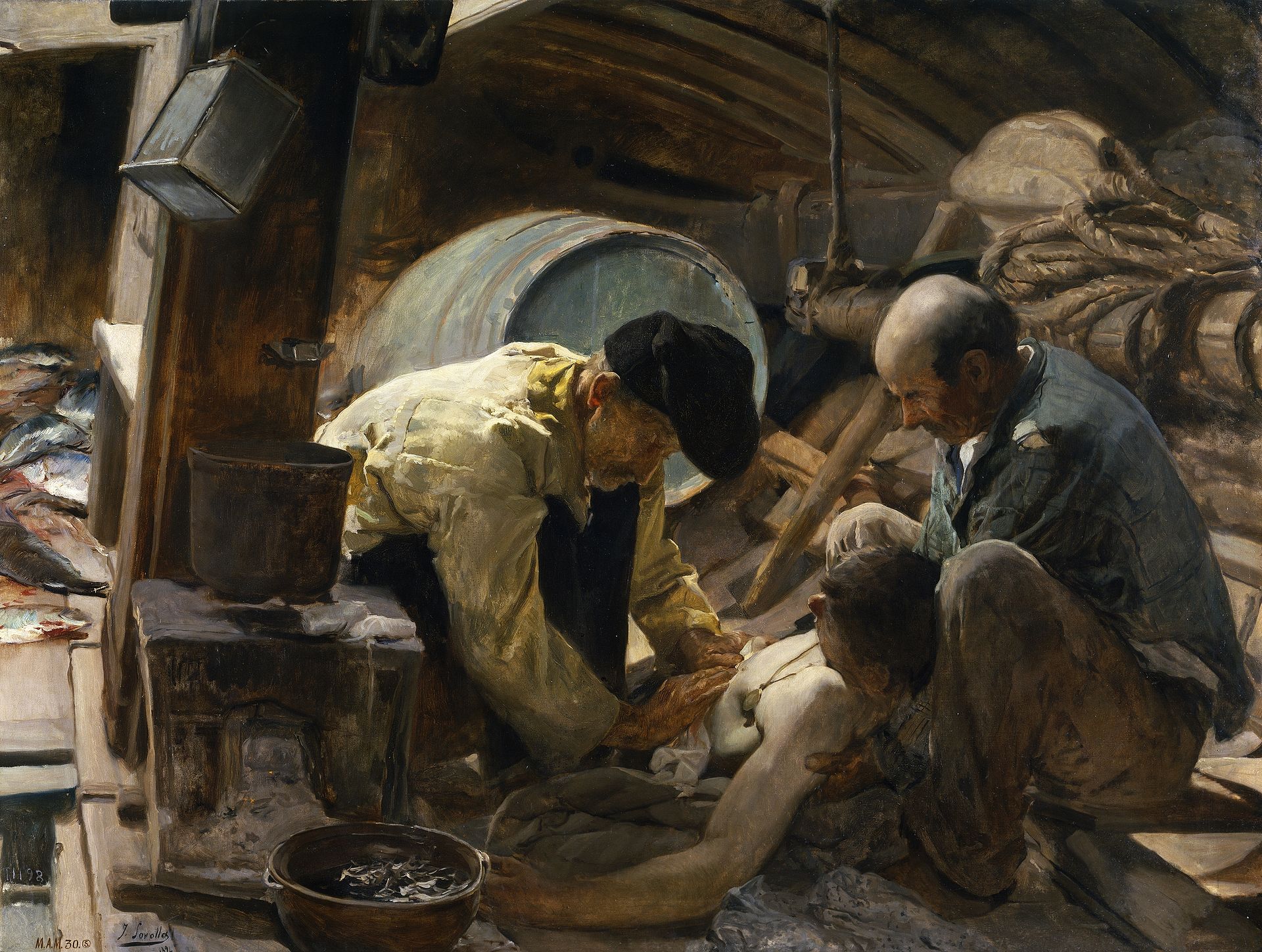 | Must-See | ||||||||||
Boys on the Beach | Joaquín Sorolla y Bastida | 1909 (Signed in 1910) | Oil on canvas | (5)Published | 검수 완료 | boys-on-the-beach | Between late June and late September 1909, during a fruitful three-month stay in Valencia, Joaquín Sorolla produced several masterpieces, including The Horse’s Bath. While this work is signed "1910," it must have been painted in the summer of 1909, as it was already reproduced in a book printed in December of that year. Reflecting his Mediterranean fascination, Sorolla drew on the motif of nude children favored by Mariano Fortuny and Sargent, but distinguished his work by removing the horizon and bringing the sea’s edge into the immediate foreground, turning the water's movement into a purely pictorial subject. Despite the canvas's size, he painted it from life without previous studies, achieving a perfect balance between static postures and dynamism. The composition strategically guides the viewer’s gaze: the diagonal position of the boy in the foreground draws us into the canvas, while his turned face carries our gaze back to the second boy and finally to the abandoned posture of the third, who lies parallel to the upper edge. There is a gradual increase in relaxation and chromatic intensity according to the distance from the viewer; the white flesh of the nearest boy transitions through the tanned shades of the second to the reddish-bronze of the soaked boy in the background. Sorolla meticulously rendered the sun’s intensity through highlights that evolve from matte white impastos on the driest boy to very luminous reflections on the fully wet skin of the third. The artist captured the movement of the water using very broad brushstrokes with turquoise, blue, violet, and mauve tones, also reflecting the small hollow created by the undertow near the central figure's feet. Of special interest is the double silhouette cast by the figures, which the artist observed under Valencia’s intense midday sun: their lower silhouettes correspond to their reflections on the water, while those directly below their bodies are their shadows, colored in a shade of violet. | On view + | Chicos en la playa | 해변의 아이들 | Room 060A | Divider | Feb 11, 2026 8:36 AM | 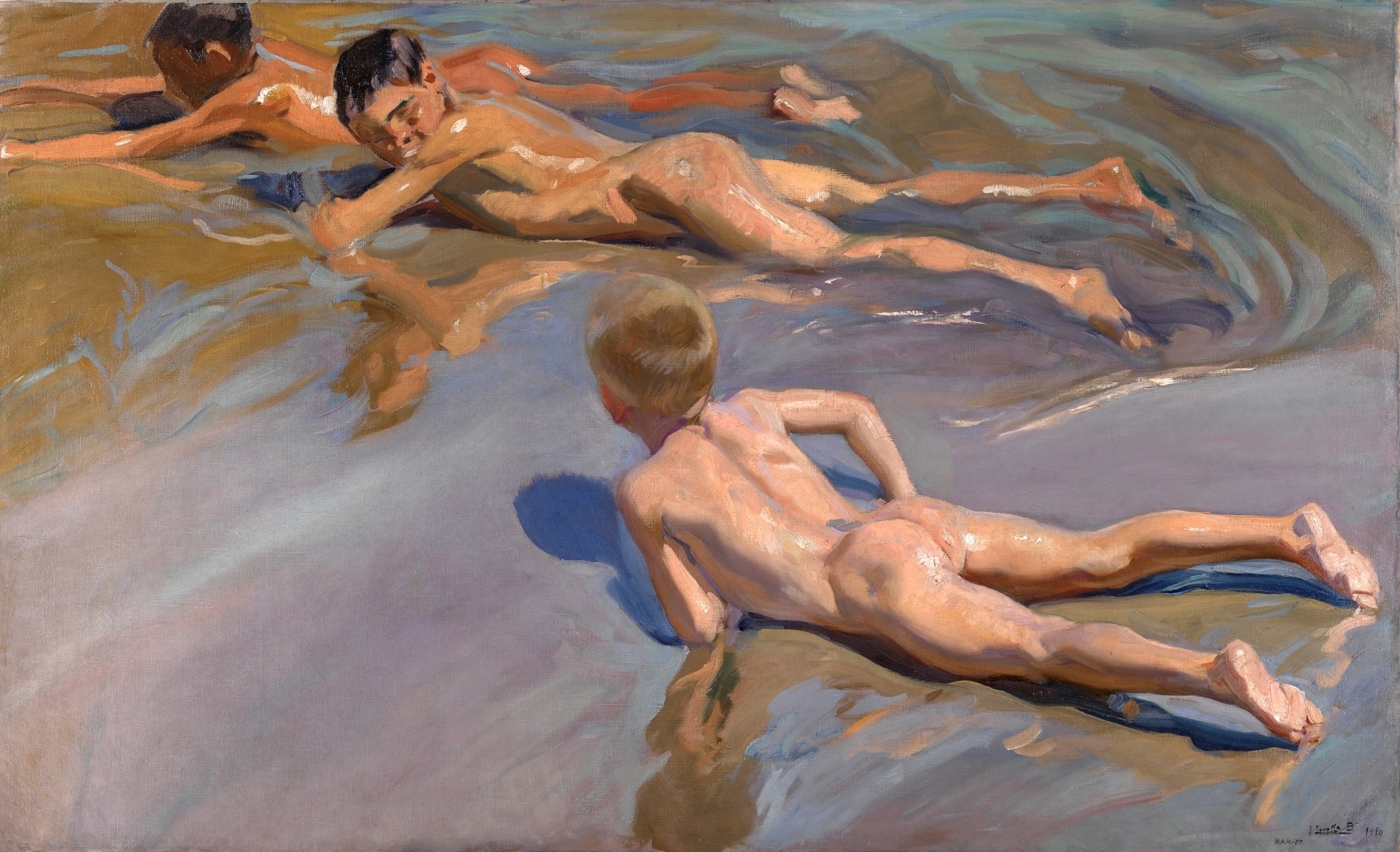 | Must-See | |||||||||||
Study of a Young Woman | Johannes Vermeer | ca. 1665–67 | Oil on canvas | (5)Published | 검수 완료 | study-of-a-young-woman | This work is a "tronie," a portrayal of an intriguing individual in exotic or imaginary costume rather than a commissioned portrait. Often compared to Vermeer’s Girl with a Pearl Earring due to their similar size and subject, the painting highlights the artist's power of invention through motifs like the blue silk draped over the model's shoulder and the soft, illuminating light. | On view + | Een Tronie in Antique Klederen, ongemeen konstig (1696 Amsterdam auction description) | The Met Fifth Avenue in Gallery 614 | Divider | Feb 4, 2026 5:21 AM | Must-See | |||||||||||||